

What to visit
Patrimony
Casa do Douro

To save the location as a favorite, you need to have an account
LoginNew around here? Let s go create an account
Description
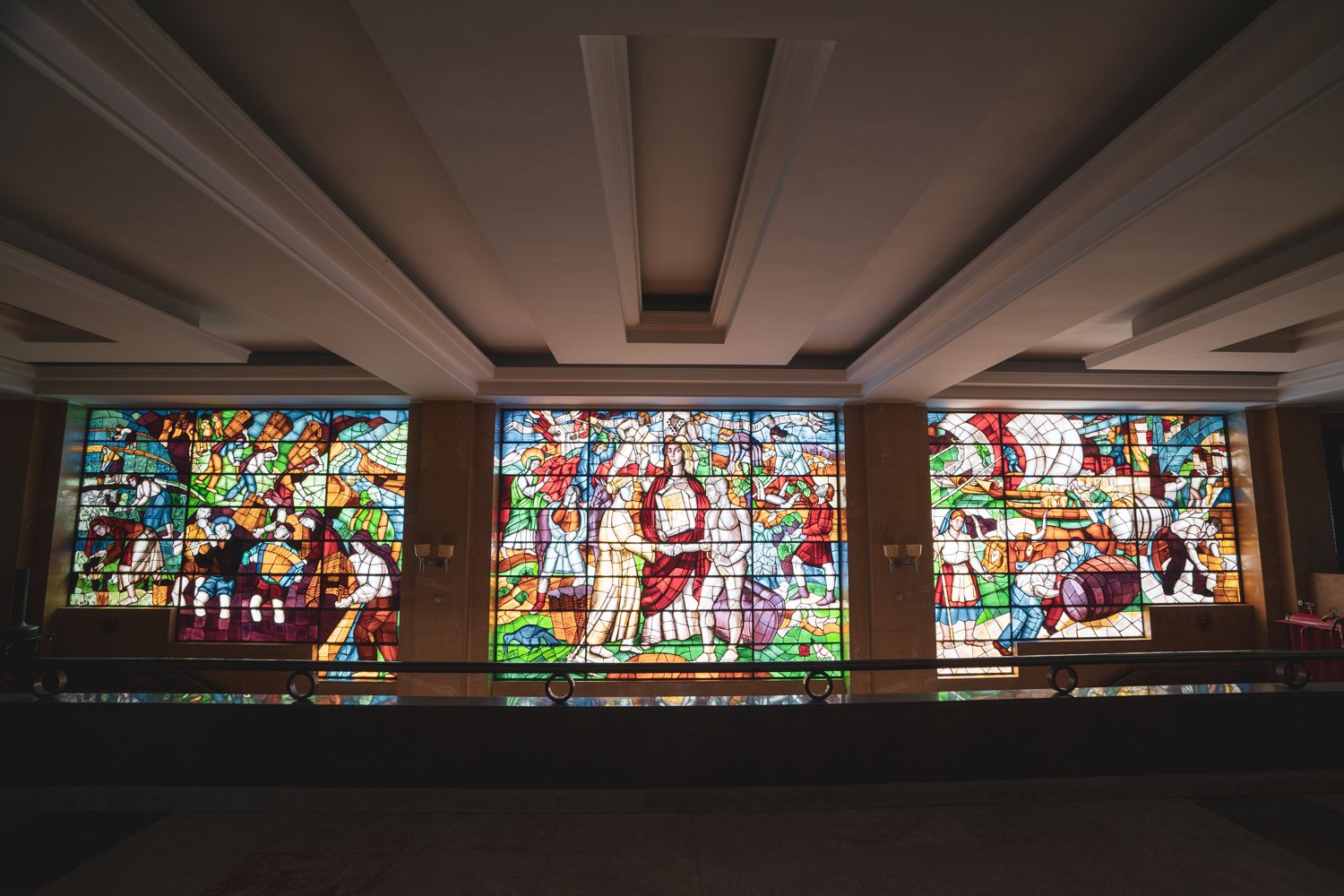
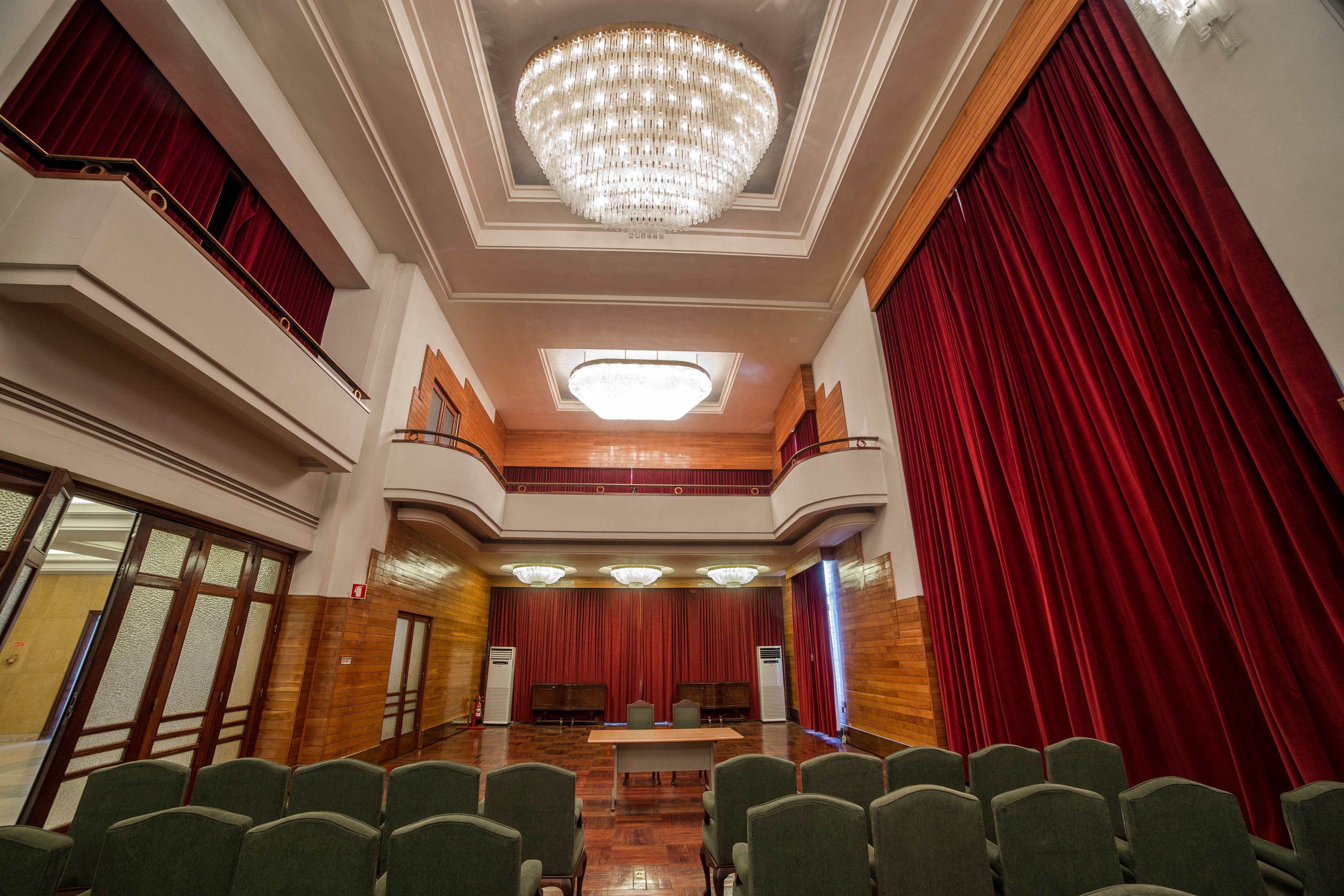
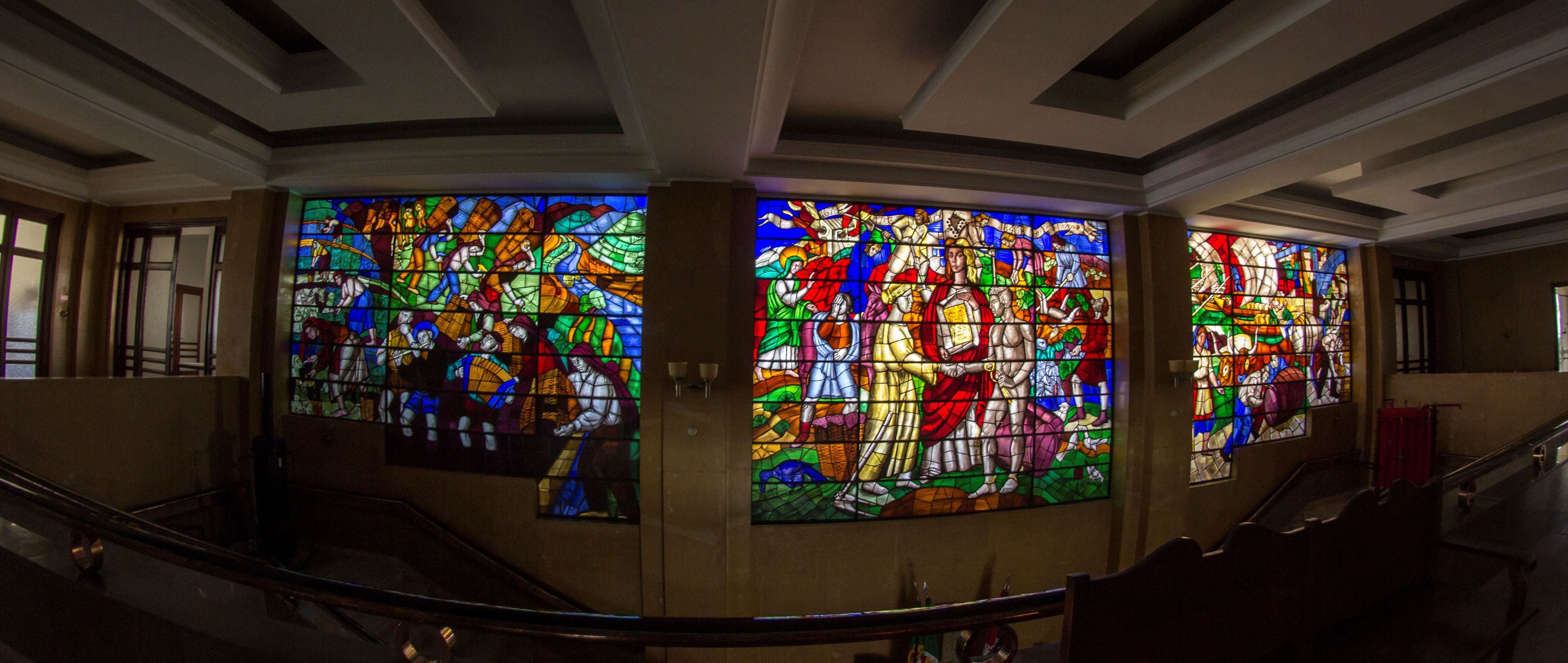
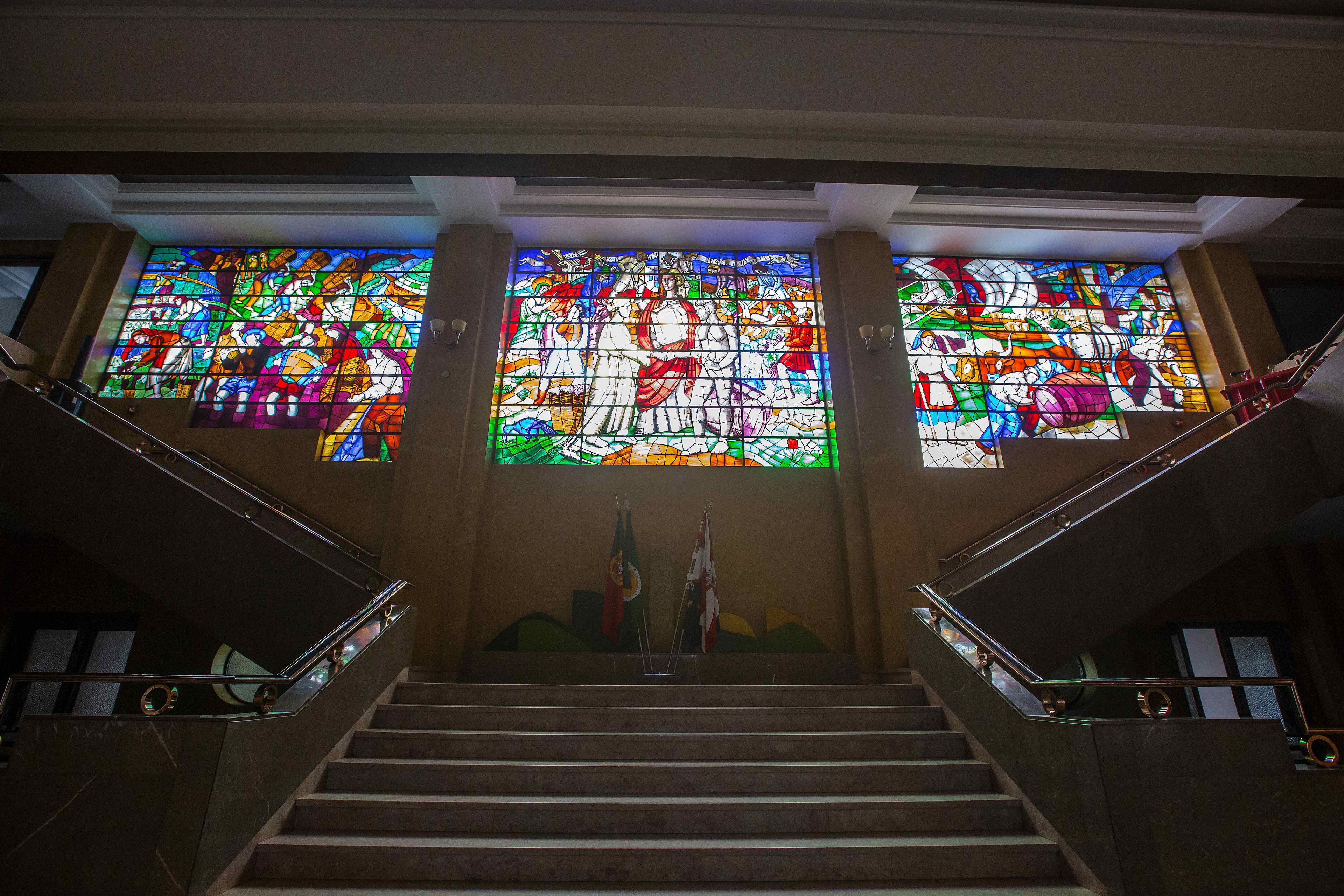
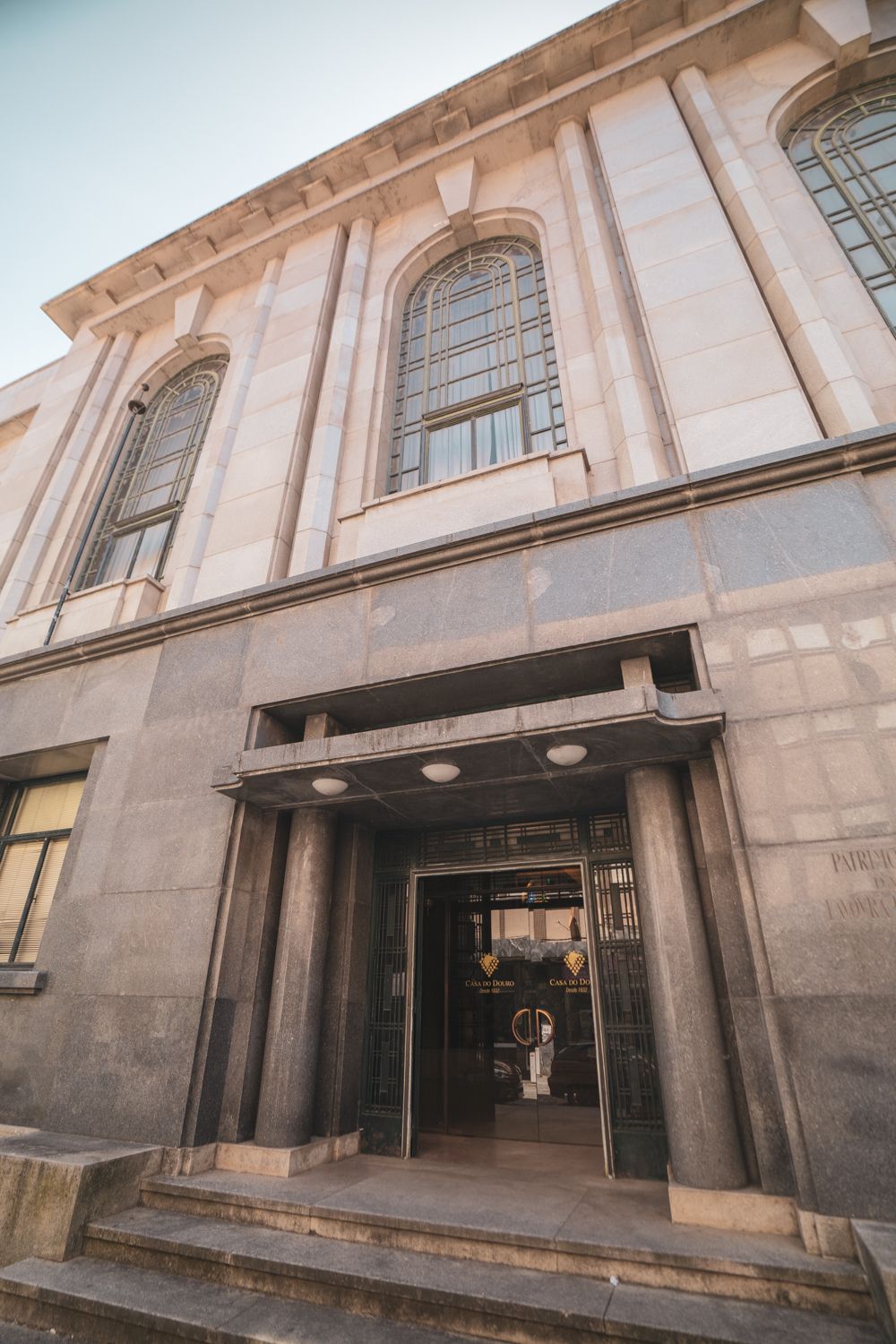
Casa do Douro was created in 1932 as the Trade Union Federation of Douro Winegrowers. Its headquarters building, dating from 1944, with a polished granite exterior, was designed by Portuguese architect José Porto. Inside, the stained-glass window by the painter Lino António and the noble hall, with three central crystal chandeliers in the shape of a cluster, weighing over a ton, as well as the Pombaline landmark identified with the number 1, are noteworthy. When the Douro region was first demarcated, 331 granite markers were placed.
The Pombaline markers (known as such because the demarcation was decorated by the Marquis of Pombal) are all different and have in common the word "Feitoria" ("feitoria wine" synonymous with better quality wine) and the year (1758 or 1761).
At the time, wines were classified according to their quality and sales destination, with the best wine being called Vinho de Feitoria, sent to England; Vinho de Embarque, exported to Brazil and Vinho de Ramo sold in Portugal.
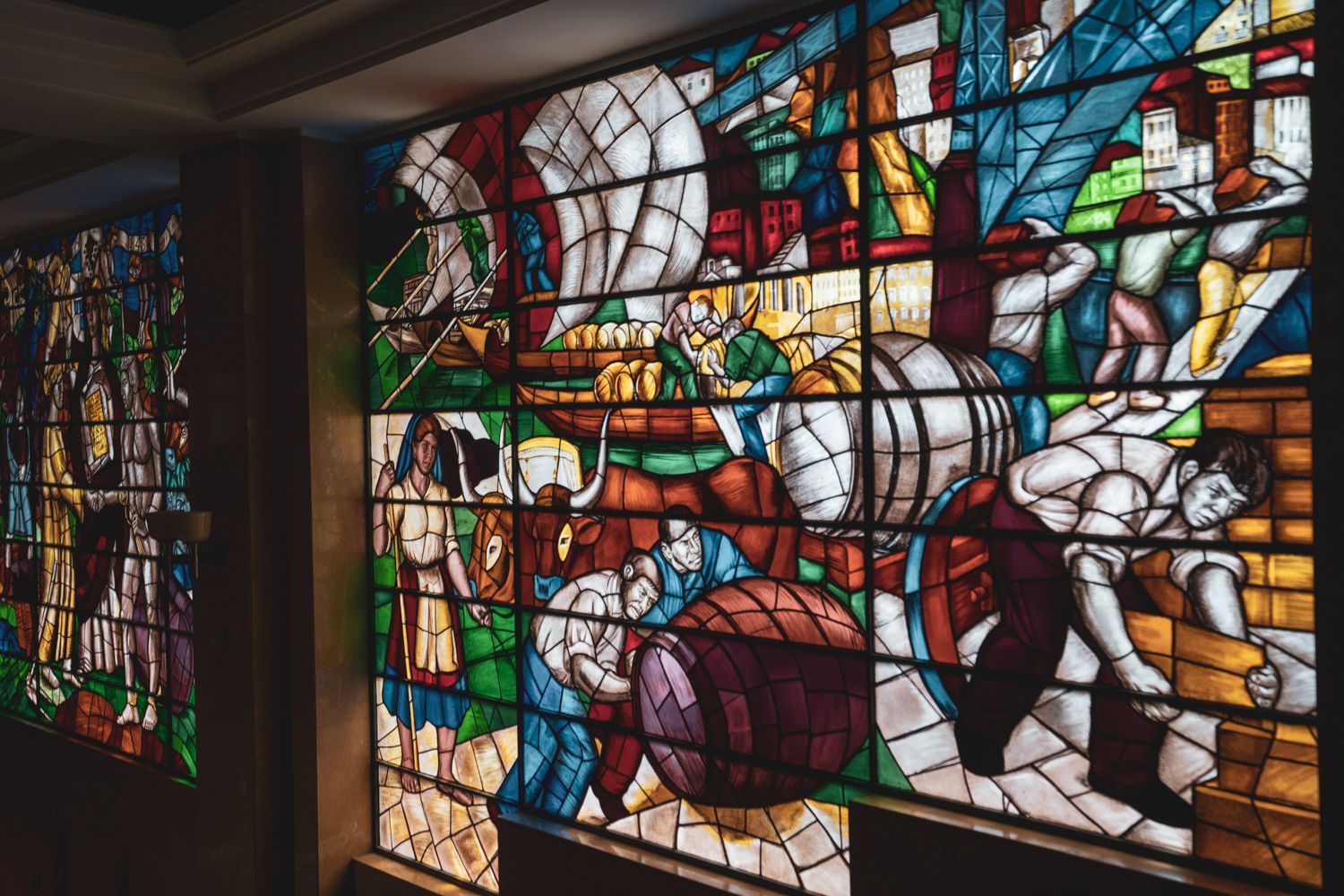
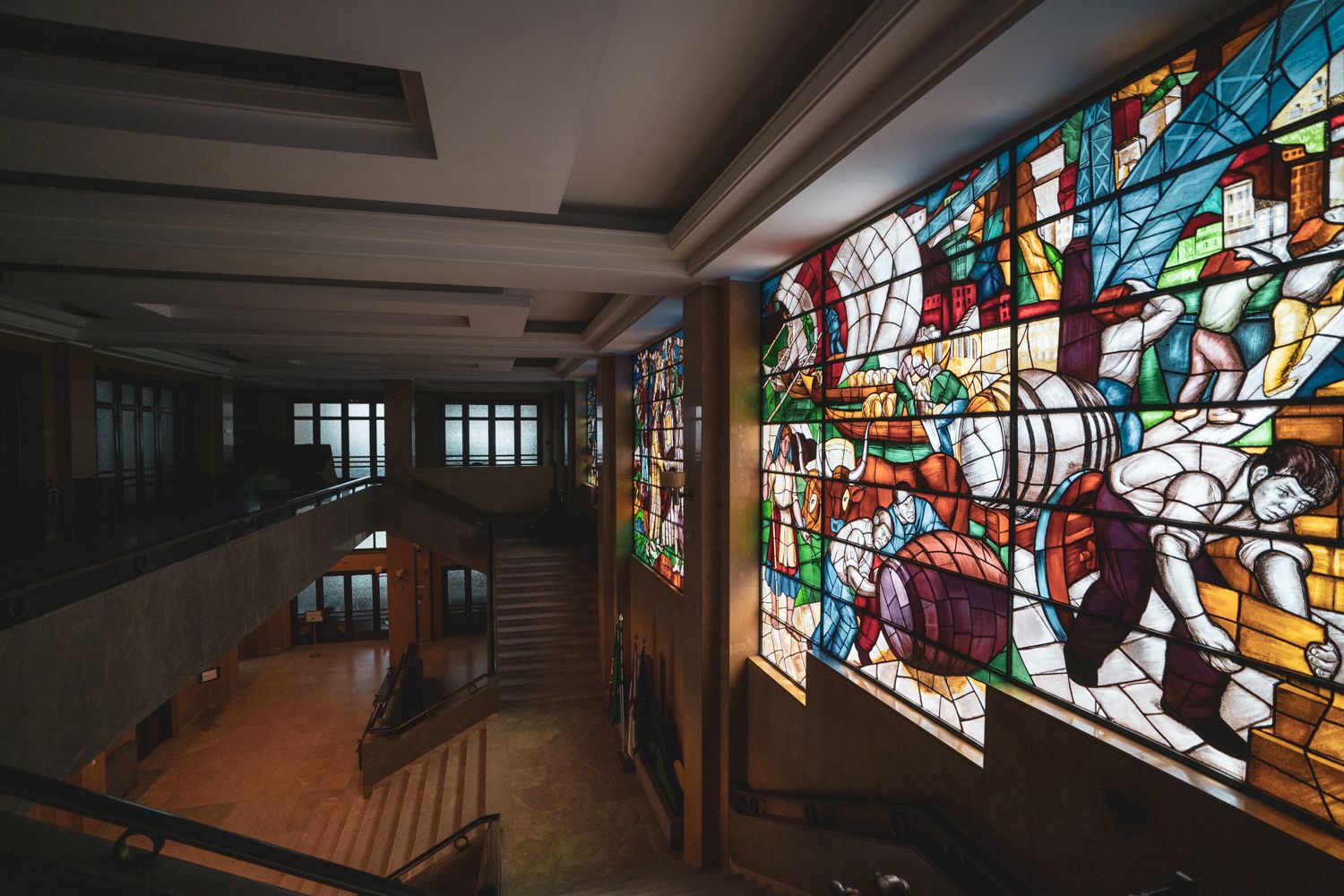
The Casa do Douro stained glass window, by the painter Lino António, sums up the dynamics of the Douro Demarcated Region. It covers an area of 50m2 and forms a triptych. In the center panel, we can see three large figures.
The figure in the center represents the Casa do Douro and shows a parchment that reads "... Casa do Douro, decree 21 883, November 1932". This means that the government, through the aforementioned Decree-Law, created the Trade Union Federation of Viticulturists of the Douro Region in November 1932, which is now Casa do Douro. The figure on the left represents agriculture with hooks at its feet. The figure on the right symbolizes commerce and is holding a caduceus.
The figures holding hands symbolize the pact of honour and gentlemen between the production and trade of Douro wine. At the top is the chapel dedicated to Santa Marta, patron saint of the Douro.
The panel on the left, dedicated to agriculture, shows, through the figures and landscapes characteristic of the Douro region, the typical work of the grape harvest, transportation and treading.
The panel on the right, dedicated to commerce, shows the city of Porto, from which the fortified Douro wine is known, and the means of transportation used at the time.


