
What to visit
Patrimony
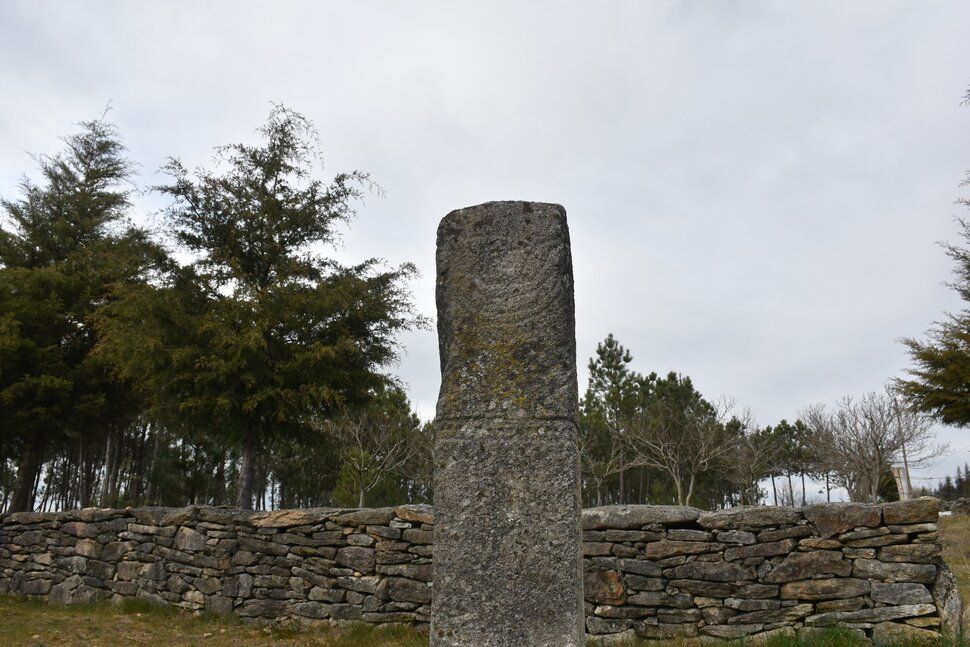
Alvite Menhir Statue

To save the location as a favorite, you need to have an account
LoginNew around here? Let s go create an account
Description
Located in Quinta dos Caetanos, in the parish of Alvite, where it was moved to ensure its integrity, is one of the two menhir statues found in the mountains by local people. It is made of granite and approximate calculations point to the Chalcolithic/Early Bronze Age, between the 3rd and 2nd millennia BC.
The statue has an adornment on its head. The eyes, nose and mouth have been engraved. There are two dots between the eyebrows and a horizontal line across the top of the face, which suggests the existence of a hat. On the statue, in the chest area, there are four grooves that scholars have interpreted as necklaces.
The figure wears a garment, decorated above the waist, and has other decorative elements, such as an insignia on the chest and a belt. They are pieces that reflect a stratified society, where the figure of the chief is the central link. Monuments like these were intended to be fixed upright in the ground, either alone or grouped together in alignments or cromlechs, or associated with other megalithic monuments (dolmens or dolmens).
Studies already published by specialists indicate that they have a symbolic-religious meaning associated with the cult of fertility, of Man and Nature or various other sacred or territorial meanings. They are part of an imaginary that bridges the gap between the world of the dead and the world of the living.


