

What to visit
Patrimony
Almacave Church

To save the location as a favorite, you need to have an account
LoginNew around here? Let s go create an account
Description
It was here that the first Cortes of Portugal took place, on September 23, 1143, with the presence of our first king, Afonso Henriques, on his return from Zamora (Spain) where he had gone to sign the Treaty of Independence of Portugal. Almacave was a sacred place during the Roman occupation, considered the sacred field of the dead (macab) according to the historians Almeida Fernandes and Dr. Manuel Gonçalves da Costa.
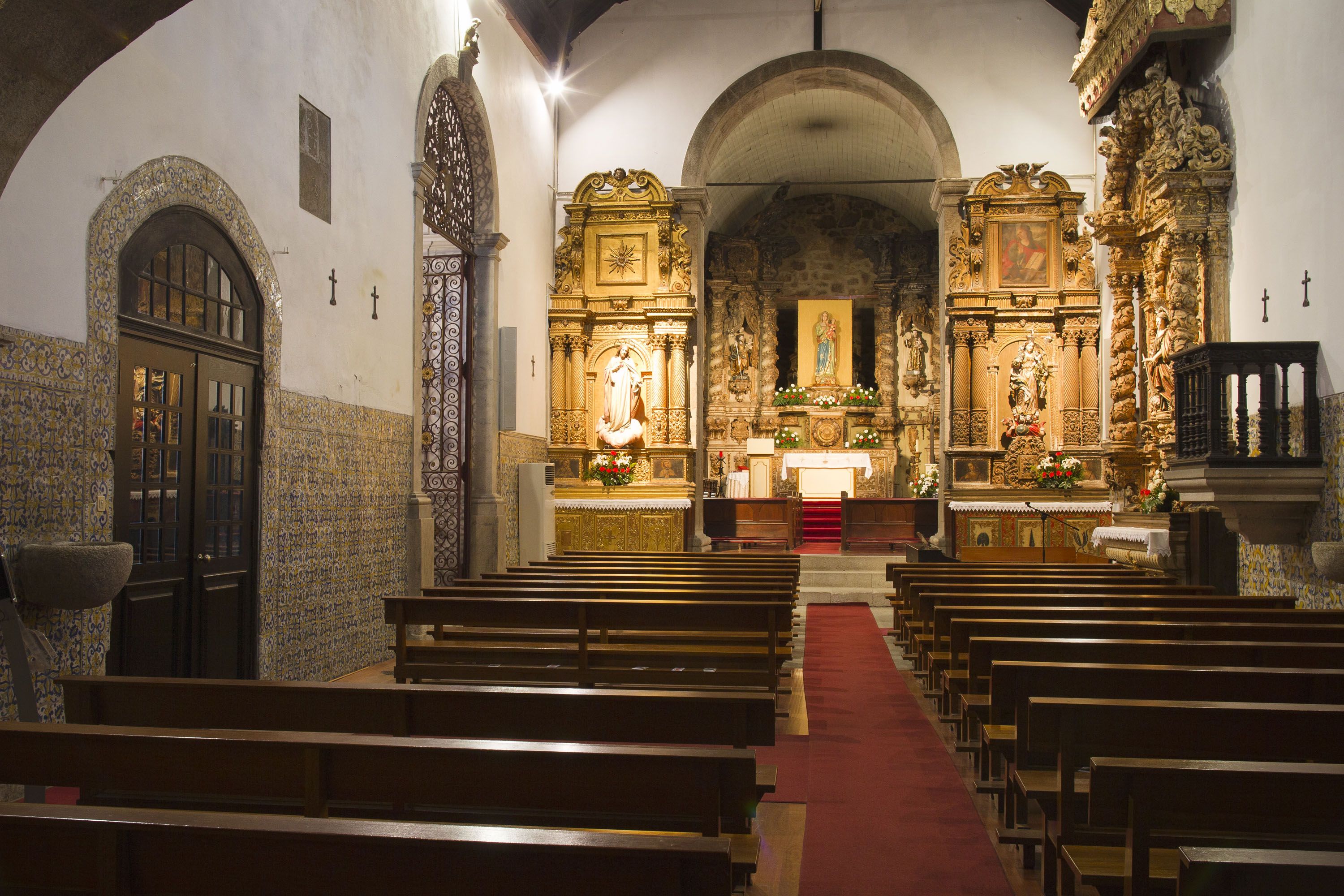
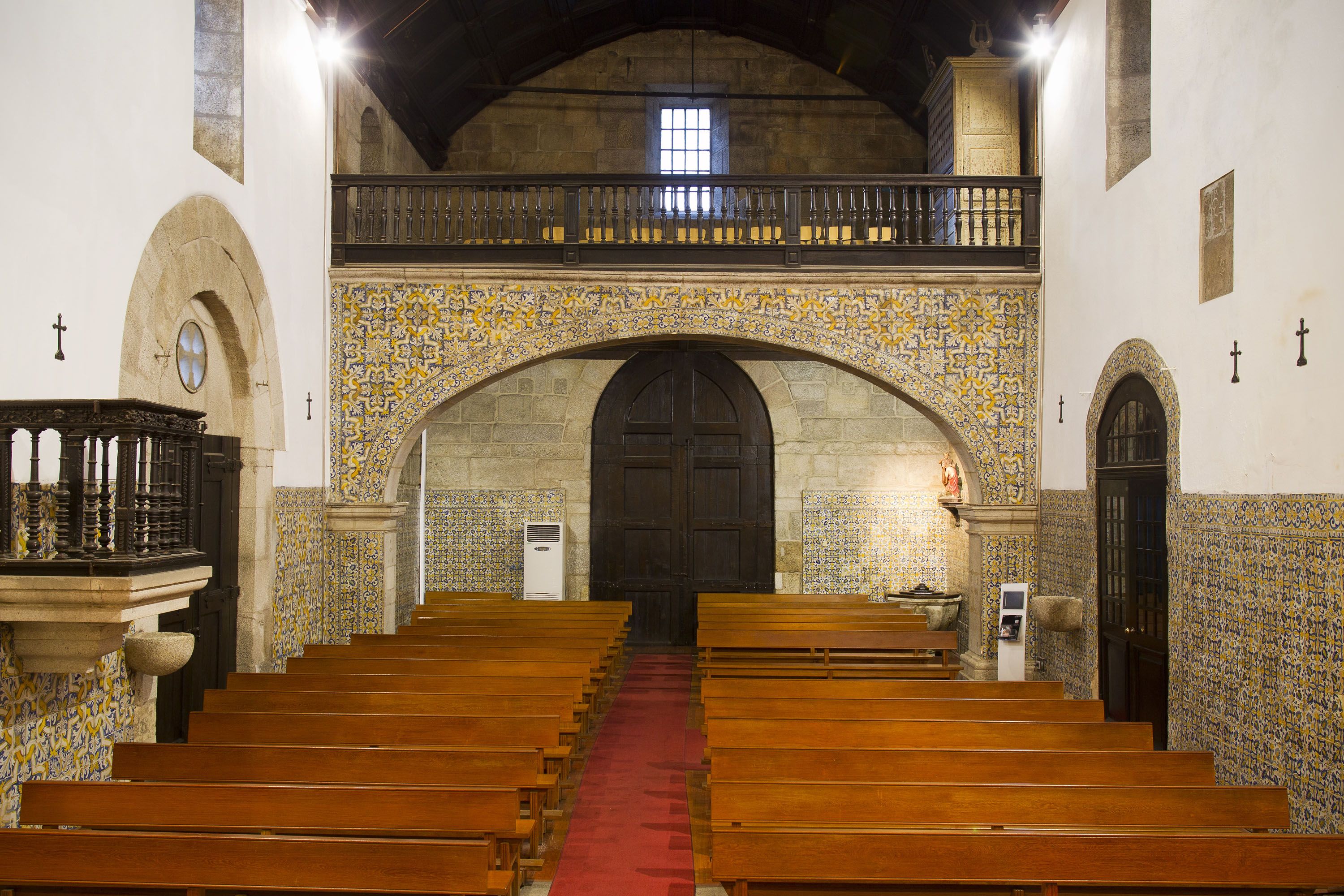
Pinho Leal said that Almacave was the primitive cathedral at the time of the Suevi and Visigoths and that from 716 to 1102 it was a Moorish mosque. According to Rodrigo Mendes da Silva (Población General de España), it was purified and consecrated in 1102 by Archbishop Bernardo of Toledo. The Collegiate Church of Almacave was already known in 1152. Inside, you'll appreciate the standard "maçarocas" tiles (17th century) and the "lasso and roses" tiles. The chancel dates from the second half of the 18th century. In the high choir, the Roman funerary inscriptions (1st century) should be appreciated, as well as the one located outside in the drawer to the left of the church's exterior entrance.
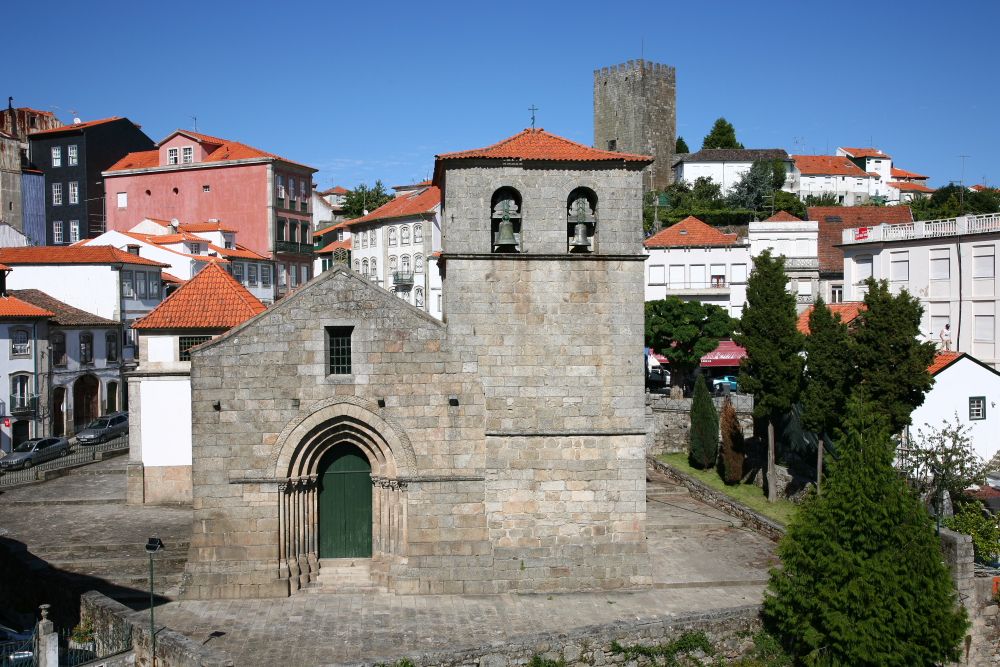
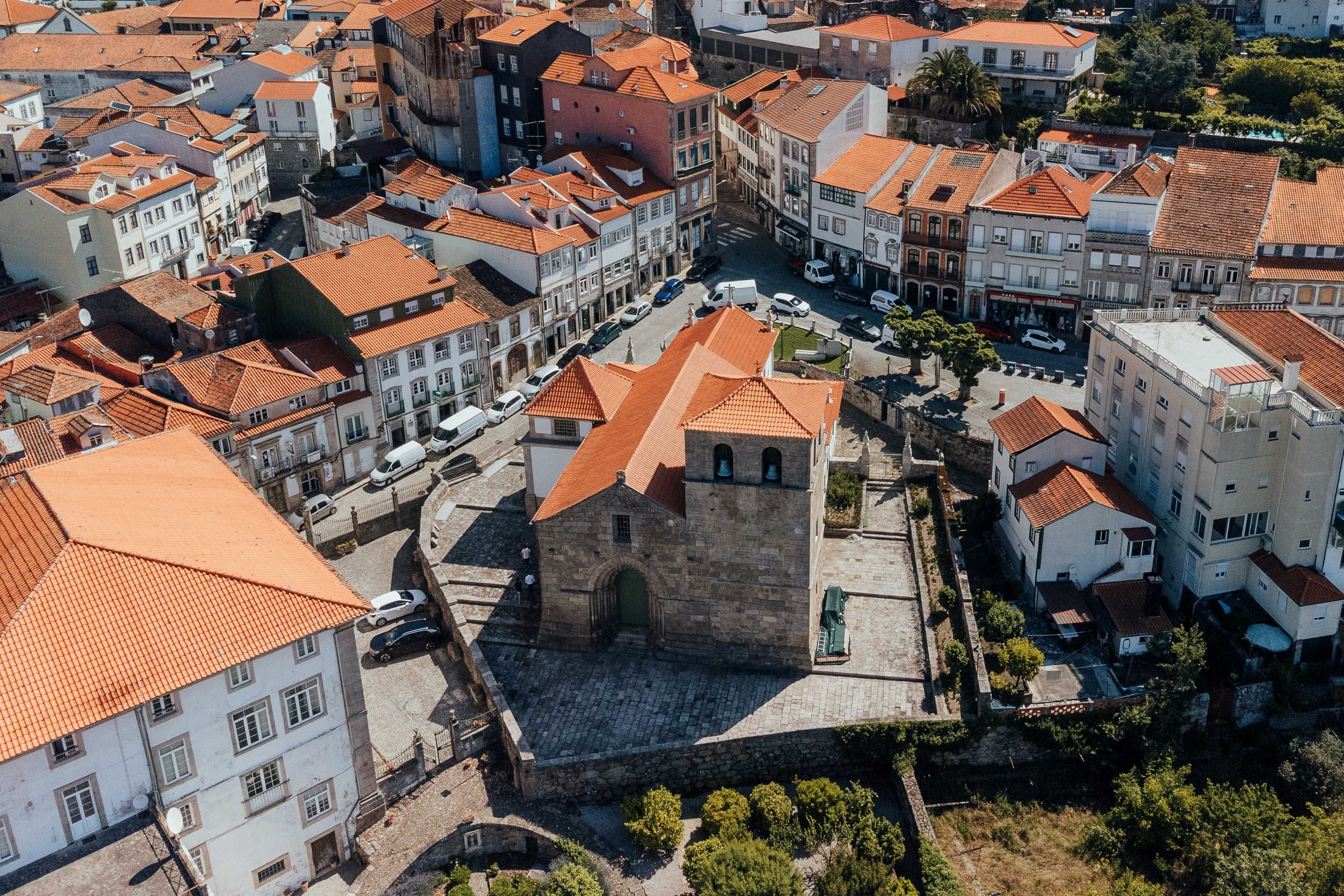
The Romanesque main façade has a 16th-century tower next to it, the bells having been brought from the castle. Almacave's "collegiate church" was a group of clerics who lived in common with the bishop, prior or abbot, and there were also "Raçoeiros" (clerics entitled to a ration). Halfway between the church and the palace is the residence of the current bishop. The churchyard around the church was only tiled in 1882 to welcome King Luís I.
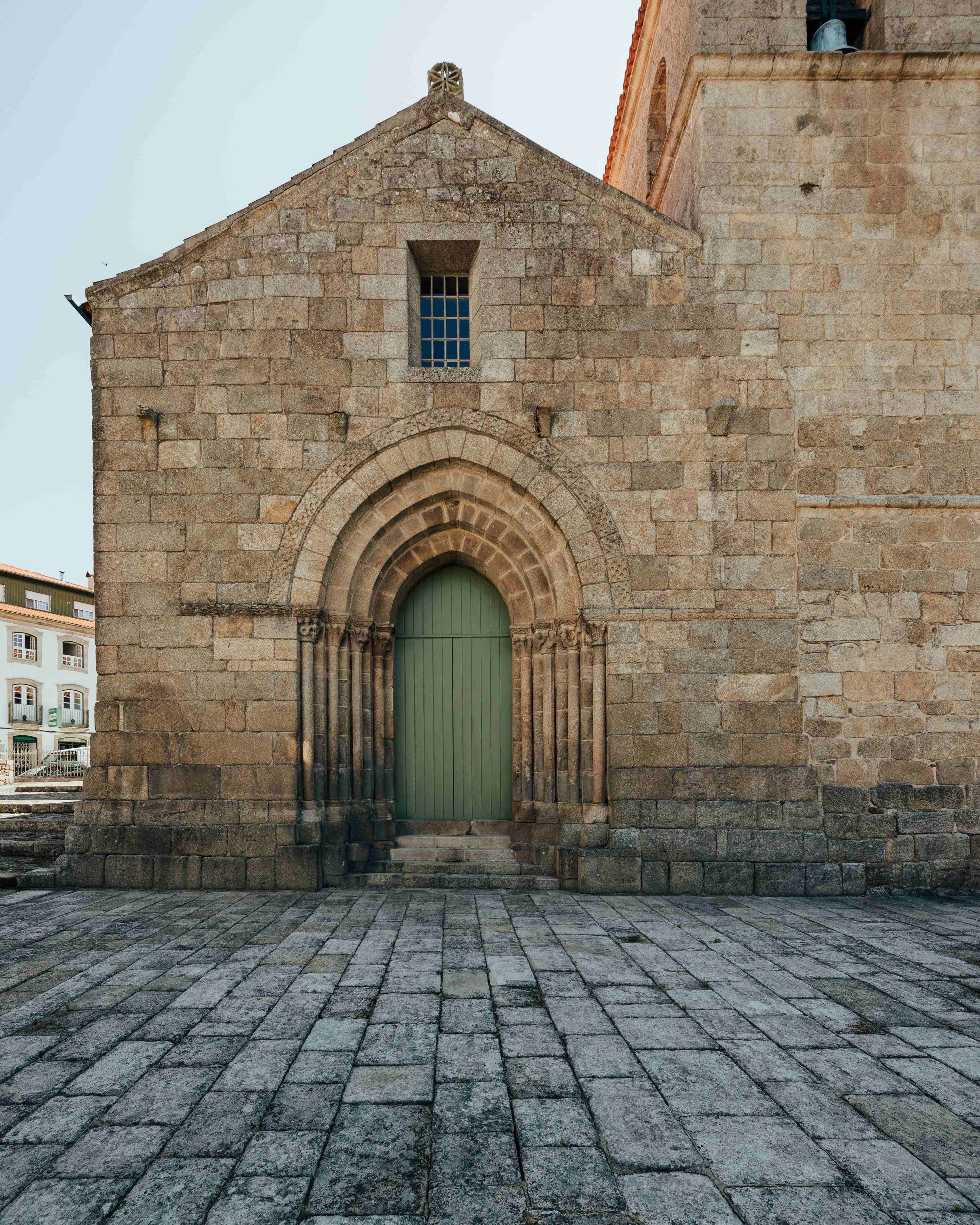
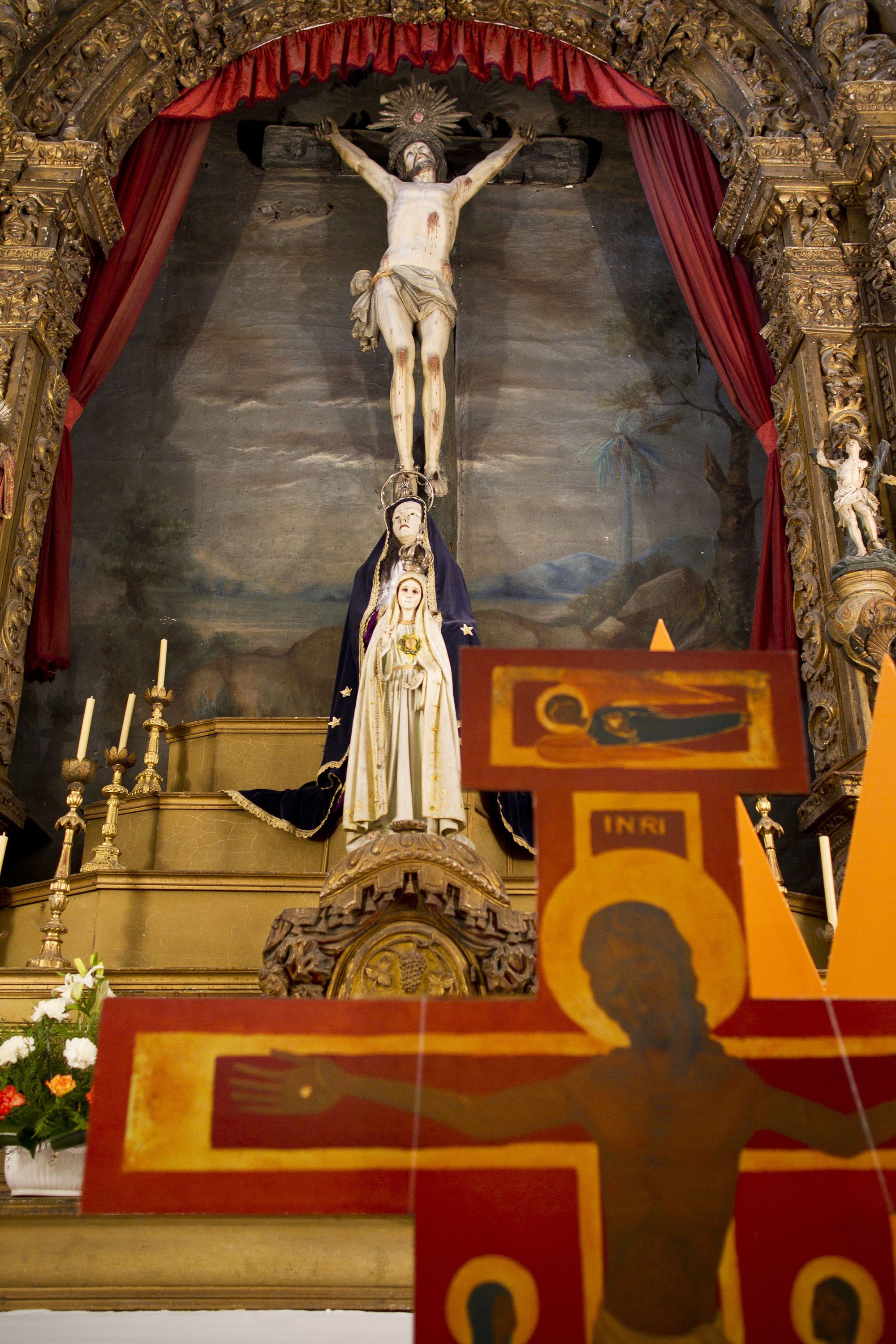
Of particular note is the Romanesque south side door. The altar of Our Lord of Agony features the "Jansenist" Christ, which differs from the usual one in that his arms are raised.


