
What to visit
Patrimony
Parish Church Of Santa Eulália - Cumieira

To save the location as a favorite, you need to have an account
LoginNew around here? Let s go create an account
Description
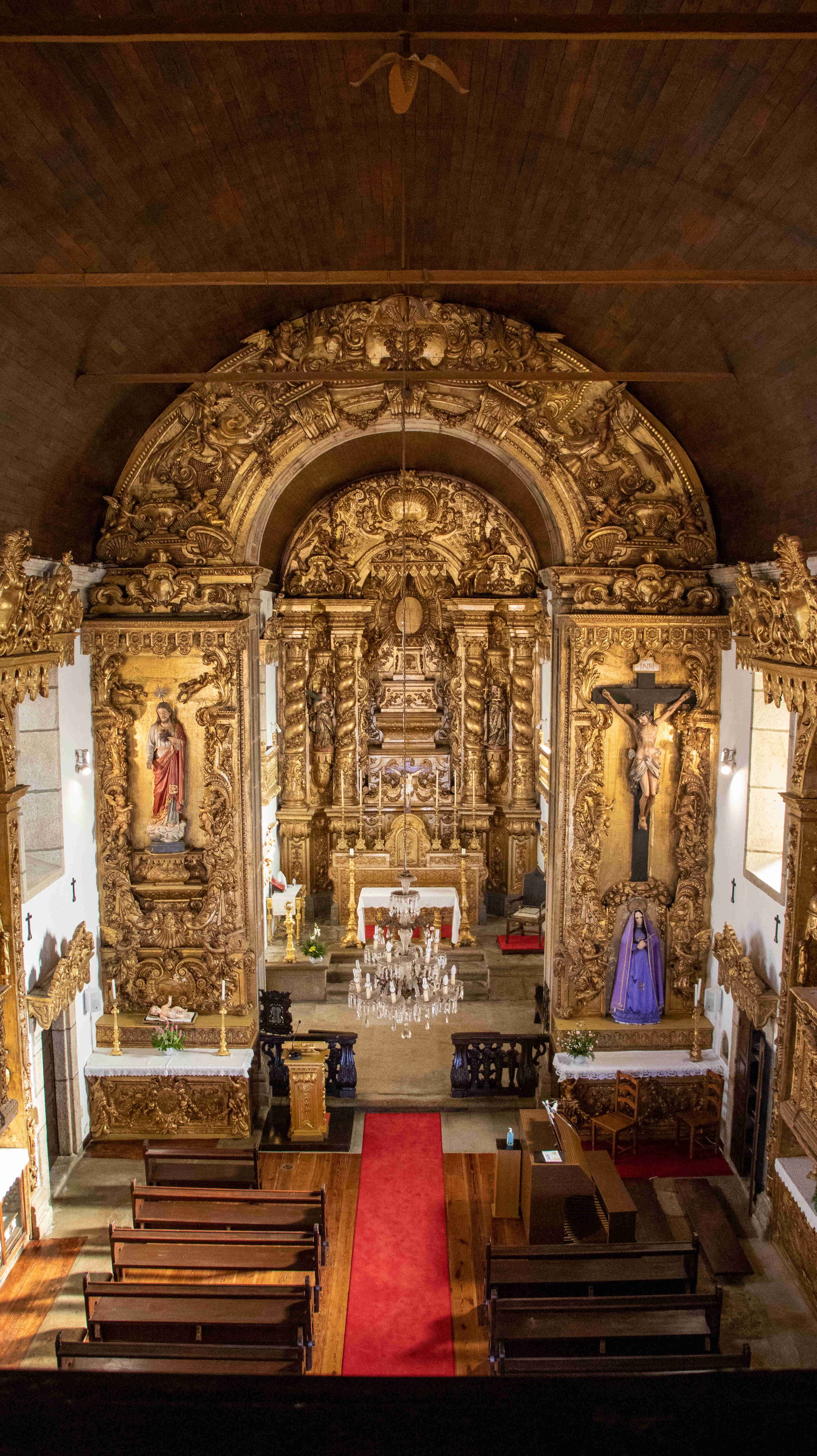
The church of Santa Eulália was built more recently (1729), in relation to the creation of the parish. In terms of the paintings inside, the Tuscan "architect" (Nicolau Nasoni) is credited with having intervened directly or indirectly, although it is categorically stated that it was he who worked on it "at the expense of the patron Count of Mateus, lord of Cumieira at the time". He is credited with the paintings on the ceiling (which have unfortunately been replaced) and those on the walls, which have been overshadowed by whitewash. The following Latin inscription has been engraved on the portal (entrance) and inside (wind guard), with the following layout: NICOLAO NASONIO, SENENSIS PINGEBAT, ANNO 1770 Therefore, three years before his death, Nasoni entered this church. On the opposite side, from the inside (at the end of the nave) there is another date: 1779. This is one of the most beautiful (and spacious) temples in the municipality, whose interior dazzles with its profusion of magnificent (Johannine) gilded woodwork, with a number of valuable (and sumptuous) carved altarpieces from the same period standing out. Images of great artistic value (17th/18th century) and a 17th century monstrance complete the valuable collection of sacred art. The altarpiece of the high altar is a beautiful work of elaborate Baroque style, with images of the patron saint (on the right or Gospel side) and St. Anthony (on the Epistle side). The throne is of rare beauty in proportion to the very unique carvings. The pelmet that joins the two columns of the throne is also delicately carved and exquisitely aesthetic, with another detail to confirm it: on the opposite side (and in the same direction) there was another pelmet of the same style (and carving) to harmonize and form a pair. The web (partition) separating the chancel from the nave (or people's nave) is made of (exotic) wood worked with delicate braids, and there are two movable pieces in the same style (nothing is out of place) one on each side of the transept arch structure which, opened on hinges, served as original confessionals. An ingenious space-saving solution. The arch (on the nave side) is also covered in carved woodwork that connects to the side altars (one on each side). At the back of the nave, there are two more beautifully carved altarpieces, each with a pelmet serving as a canopy, as well as the altars of Our Lady of the Conception represented in a valuable image (on the right), and the one on the left where (among other images) the iconographic representation of the ancient (and rare) invocation of Our Lady of Breya stands out, crowned and with folded hands, which is said to have belonged to the ancient chapel that has disappeared and is known by the name of the titular. Two pulpits (one on each side) and four windows in the nave, adorned with carved wooden pelmets (like the rest), give balance, light and grace to the modest interior of the artistic temple. The nave is closed off by two altars, each with its own tabernacle. The one next to the Gospel bears an image of Christ dressed in a robe (seated) and with his hands tied (knees drawn together), full of drama. A temple worth seeing and admiring. It has been a Property of Public Interest under Decree-Law no. 08/83 since January 24, 1983.


