

What to visit
Green Spaces
Tinhela Walkways

To save the location as a favorite, you need to have an account
LoginNew around here? Let s go create an account
Description
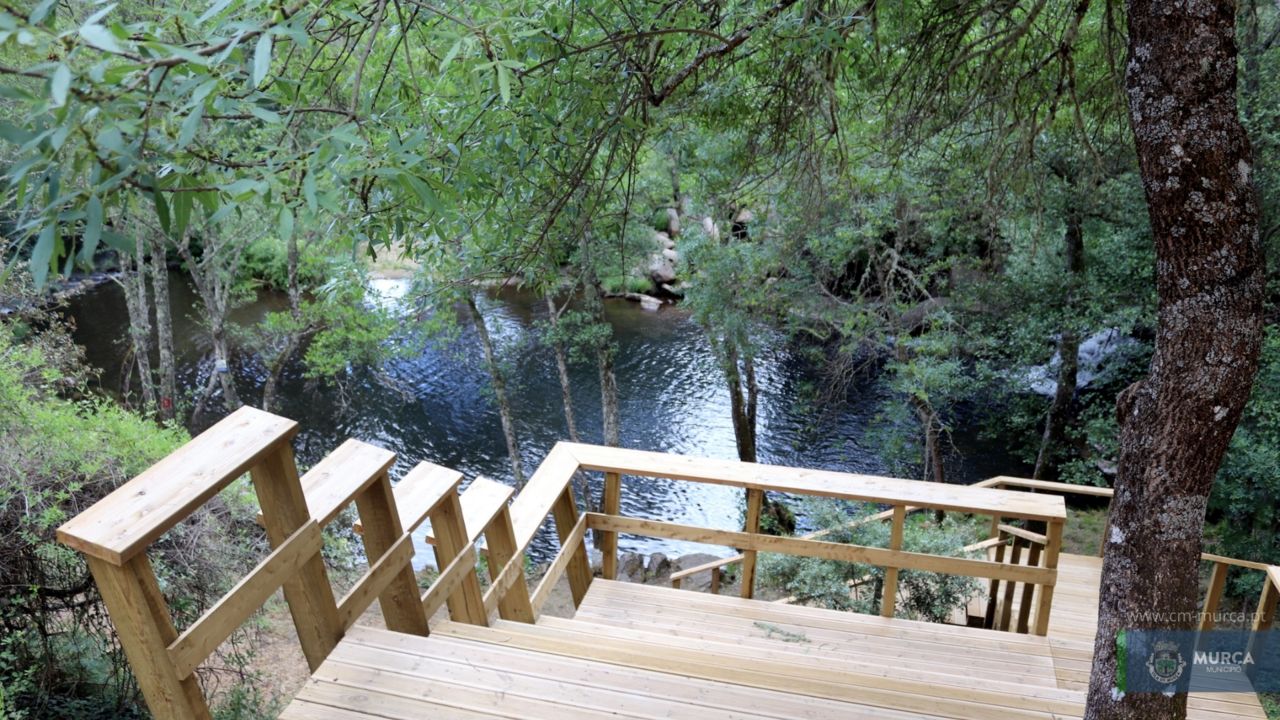
Walking in total comfort and safety without losing the magic of "immersing" yourself in nature, enjoying the enormous wealth of fauna and flora on the banks of the River Tinhela - that's what the Tinhela Walkways Trail in Murça offers you.
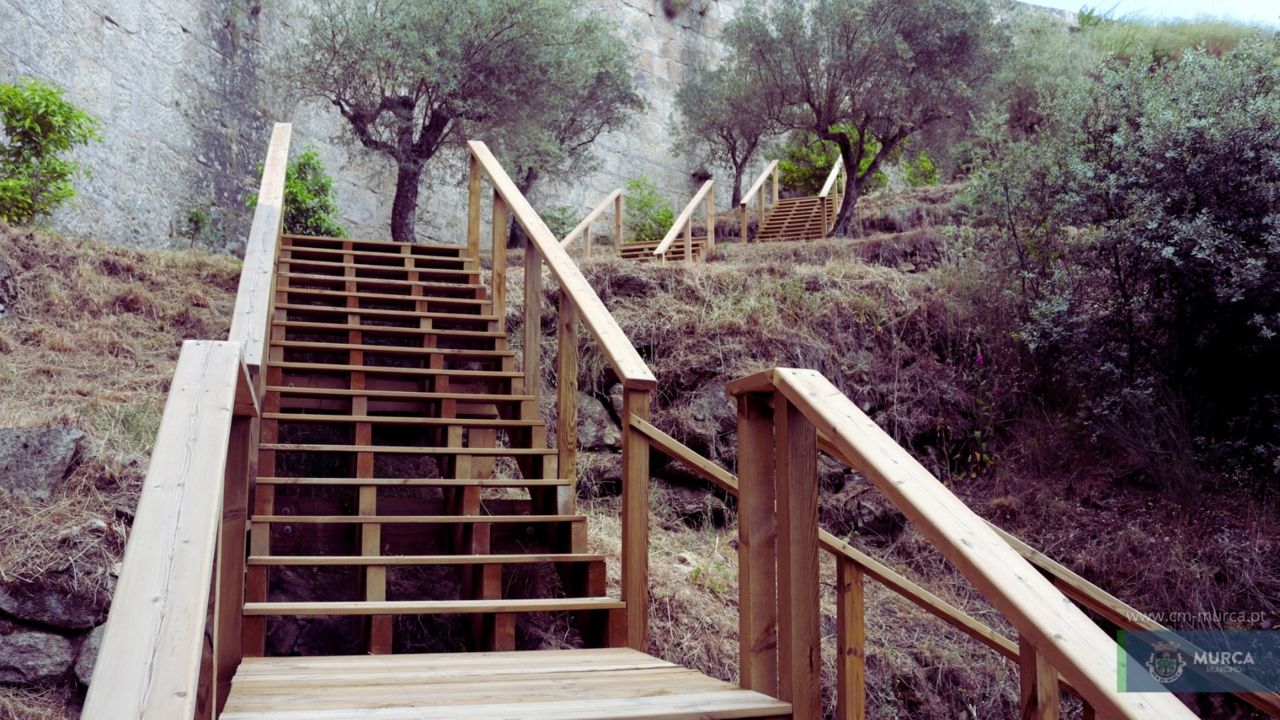
The wooden walkways, which are the first in the municipality, are perfectly integrated into the landscape and guarantee, in addition to safety, total respect for the riparian gallery of one of the best preserved rivers in Europe. The structures have been installed downhill and on the right bank of the river, creating small observation points that allow you to have a paranomic view of the landscape and follow the bank of the Tinhela side by side.
This small circular route begins and ends near the Murça gateway to the Tua Valley Regional Natural Park (PNRVT). The trail crosses the town of Murça in the direction of the Tinhela River and it is via the 'Tinhela Walkways' that access is gained to the river, allowing you to safely appreciate and more intensely experience all the natural surroundings of its banks. The urban section of the Little Route passes several points of heritage and cultural interest in the municipality, namely the PNRVT's Creative Tourism Office/Murça Entrance Gate, the Murça Cooperative Winery, Soldado Milhões Square, the Murça Nut, the former Benedictine Nuns' Convent, the Mother Church and the Manueline Pillory. These are landmarks in the town from a heritage and historical point of view, but also from an economic and social point of view. Continuing in the recommended direction towards the New Bridge over the River Tinhela, where the mythical 'Curves of Murça' begin, the trail enters the protected area of the PNRVT and follows the left bank of the River Tinhela towards the Roman Bridge (Ponte Velha), continuing along the right bank of the river after crossing it.
At the place known as Moinho do Fidalgo, the trail returns to the town of Murça, passing the Capela da Misericórdia. At the Roman Bridge over the River Tinhela, it is possible, as an alternative to the recommended route, to follow the trail's variant and walk along the Calçada de Murça, a section of an ancient Roman road that connected Astorga to the mouth of the River Douro, and literally walk on Murça's millenary history.


