
What to visit
Patrimony
Sever Church

To save the location as a favorite, you need to have an account
LoginNew around here? Let s go create an account
Description
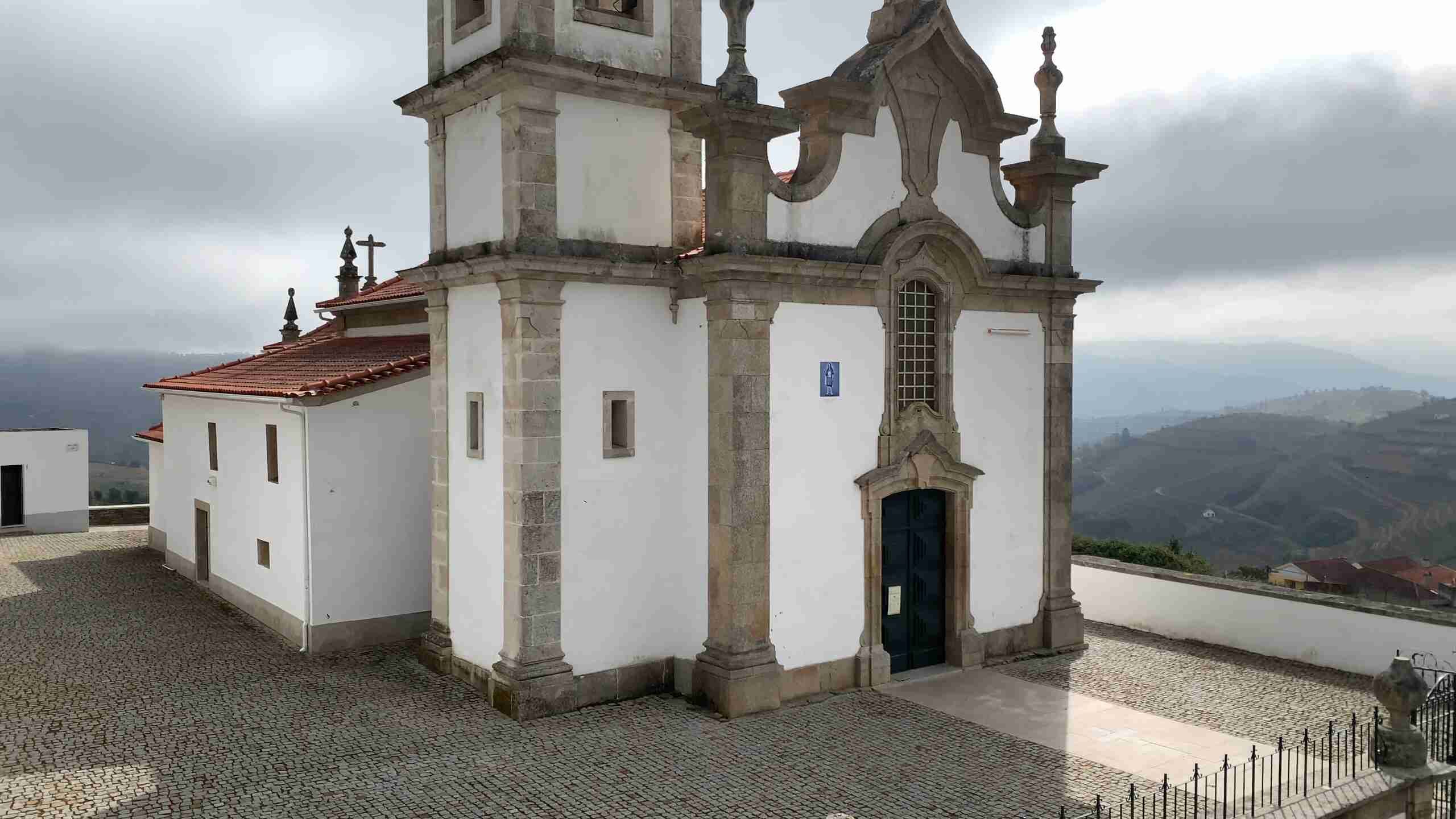
Set in a walled churchyard, with a stonework coping and wrought iron railings, is this rectangular church with two sacristies attached to the right elevation. It is a building whose design reveals a clear 19th-century taste, although the cornice of the oldest sacristy suggests 18th-century workmanship. It is punctuated by a small pediment with a depressed arch at the apex. It is raised and curved. The stonework of the door continues to the upper part, framing a sub-rectangular window also with a depressed arch - crowned with a convex pediment, interrupting the cornice of the façade which here describes a half-arch. This main façade is topped by a raised, curved and interrupted pediment, flanked by plinths with fireplaces and crowned with a pedestal on which rests a crowned cross. Attached to the left elevation is a square tower, tripartite on levels, with good stonework on the cornices and cornerstones. It has a pyramidal finial and a marble clock face set in a pediment on the upper cornice. This belfry, which houses only one bell, is flanked at the top by four stoves similar to those on the façade, although smaller. Its entrance is somewhat concealed on the first floor. The church also has two sacristies. One, on two floors - the most recent - with rectangular windows and a cement plaque, and the original, with a stone cornice and a window with a plaque, which was extended to the west by the addition of the new sacristy. The interior of Sever's parish church shows baroque ornamentation that deserved classification. The 18th century carved high altar, with torsal columns, profusely carved, is a jewel of carving from the time of King João V or even King José, where the baldachins with asymmetrical frames stand out. Everything inside the church exudes a baroque style that continues throughout the architectural elements. The pelmets and window openings shine in their carved woodwork with the typical shell ornaments and the festoons and garlands of floral and plant motifs. The carving of the intrados of the crossing arch and its pelmet continues and extends the richness of the chancel to the side altars of the crossing arch, illustrated with angels and putti and sheltered with baldachins and fabric pelmets, as well as to the side altars of the nave and the pulpit itself. Far from being saturated, the gilded woodwork is painted with sky-blue and white marbling, giving it a fairytale dignity and the lightness possible within the grammatical exuberance it displays. While the chancel ceiling is lined with framed coffered ceilings painted with scenes from the life of Christ, both evangelical and hagiographic, the nave ceiling follows the same style, with painted coffered ceilings depicting effigies of saints and carved frames. The following wooden images inside the church stand out: a painted wooden Saint Anthony and Saint Sebastian from the 18th century; a painted wooden Saint Caetano, a painted wooden Lady of the Rosary and a painted wooden Saint Barbara from the 17th century; a painted wooden Saint Joseph with Child, a painted wooden Saint Adrian and a painted wooden Christ from the 18th century. Also noteworthy inside the sacristy is the 18th-century spout, made of fine stonework, with a relief cornice; the presence of two 18th-century torch-bearing angels and four 18th-century candlesticks.


