
What to visit
Patrimony
Parish Church - São Miguel De Lobrigos

To save the location as a favorite, you need to have an account
LoginNew around here? Let s go create an account
Description
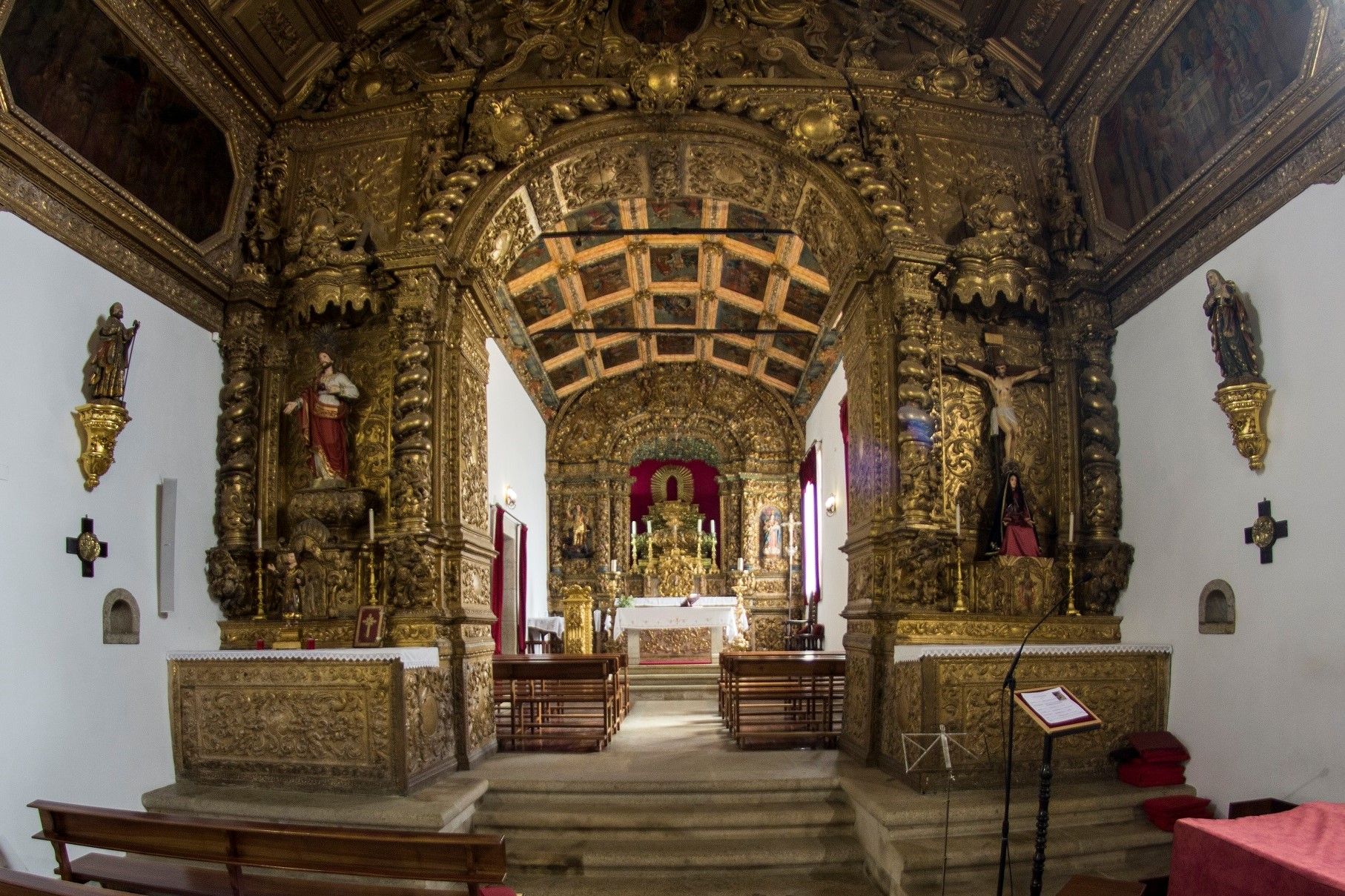
It is a rectangular church with a detached chancel, lower in height than the rest of the building, which has a sacristy attached to the left elevation. Access to the church entrance is via a small granite staircase with four steps and a landing. At first glance, the relief stonework of the openings, cornice and cornerstones, as well as the tower's plinth, stand out. At the back, embedded in the churchyard wall, is the chapel of Justa Rita, a popular "saint". The building's entrance door has a rectangular frame, carved with geometric iridescence on both the jambs and the lintel. Epigraphed with "ANNO DOMINI" (where currently only the A, D and O can be read), this raised and detached frame is decorated on the side with pyramidal pinnacles with globular finials - identical to those at the intersection of the nave and chancel - and a simple cross with a light cushion. The bell tower stands tall on the left side of the church and shows good stonework, as evidenced by the white paint covering it. The entrance to the second floor, with an ogival arch, is followed on the second floor by an oval-shaped oculus, with two bells on the top floor. It has a clock with a marble dial, set into the small platband that breaks through the cornice at the top of the tower. Despite being a 20th century addition, this belfry is crowned with a pyramidal top and a spherical top, resting on a bulbar support, giving it an older tone in keeping with the temple. Attached to the left elevation of the church is the staircase to the second floor of the tower, which is simultaneously connected to the choir. Inside, the exuberance of the Baroque carved altar, in national style, stands out, with its profusion of decorative elements typical of the period. The chancel has a ceiling covered with carved coffered ceilings and altarpieces painted with Gospel scenes. The crossing arch is also paneled with extravagant Baroque carving, as are its two altars (the Epistle and the Gospel altars), where the columns and baldachins stand out. The ceiling of the nave is covered with coffered ceilings, where plant, floral and armorial motifs stand out, along with some panels illustrating biblical scenes. The upper part of the nave walls is also paneled with carvings that frame the windows and even the stonework. In between the windows, on each side of the nave, there are three wooden altarpieces painted with scenes from the Gospel. On the high altar, the polychrome wooden images of St. Michael (18th century) and Our Lady of Guia (18th century) are especially noteworthy, as are the church's iconography of St. Joseph (18th century) and St. Paul (18th century). To these should be added the beautiful images of Our Lady of the Rosary (17th century) and Saint Anne and Saint Joseph, both in painted and polychrome wood.


