

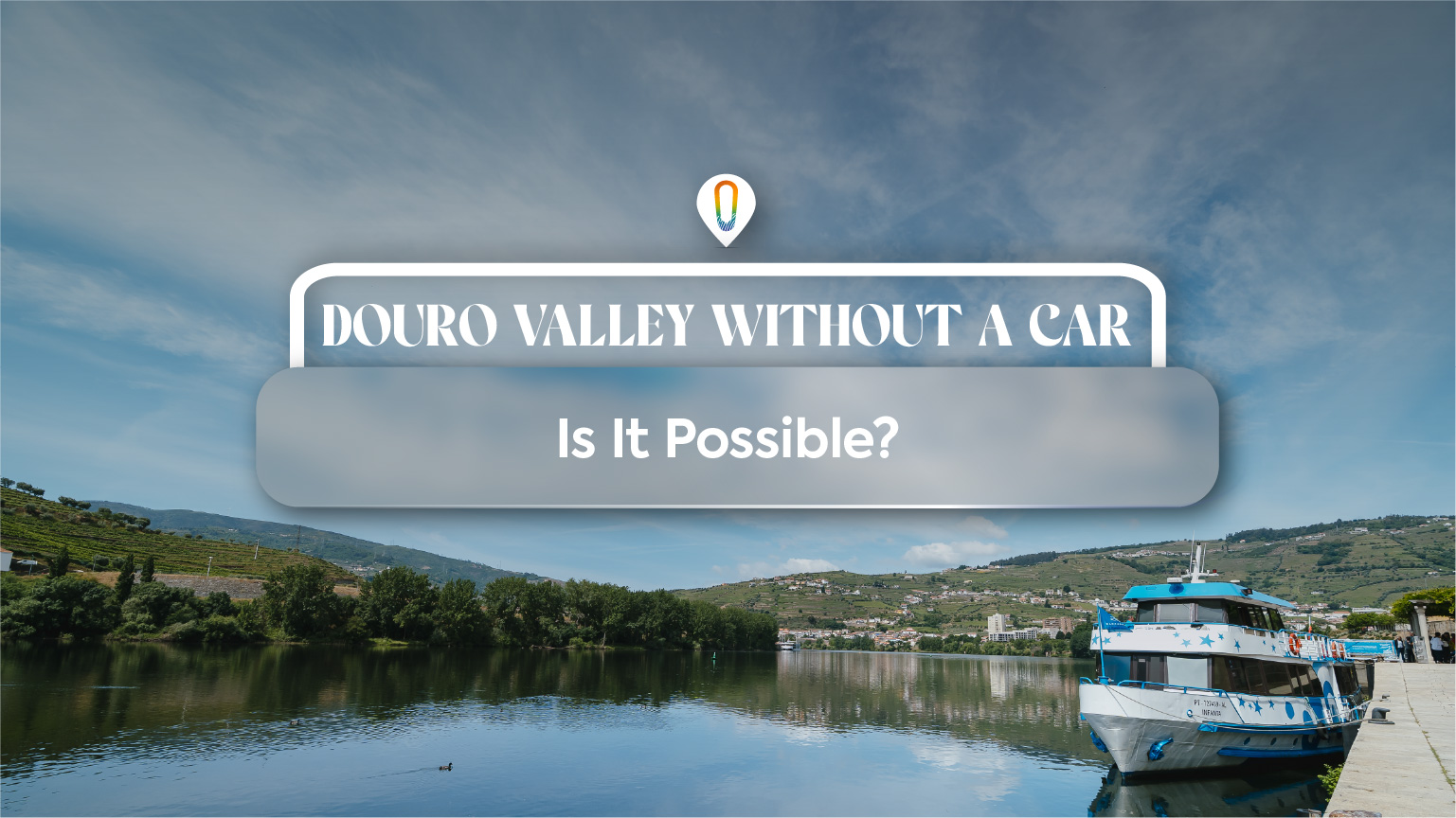
Traveling through the Douro Valley without a car is not only possible, but it can also be one of the most relaxed and authentic ways to experience the region. With scenic train journeys, river cruises, and well-organized experiences, the Douro naturally invites a slower pace — ideal for travelers who want to enjoy the landscape without the stress of driving, winding mountain roads, or parking concerns.
The best way to reach the Douro without a car is by train. Departing from Porto, the Douro Line offers a comfortable and scenic journey with stops in key locations such as Peso da Régua, Pinhão, and Tua. The train ride itself becomes part of the experience, especially on the stretch between Régua and Pinhão, where the railway closely follows the river and offers breathtaking views. Another popular option is arriving by boat, with full-day river cruises connecting Porto to Régua or Pinhão. This is an excellent choice for those who prefer everything arranged in advance and want to experience the Douro from the heart of the valley. Bus connections do exist, but they tend to be less practical and less appealing from an experiential point of view.
Once in the region, getting around without a car requires some planning, but it is entirely manageable. The main towns, such as Pinhão and Peso da Régua, are compact and easy to explore on foot, with train stations, river piers, restaurants, and key points of interest located close to one another. The main challenge comes when visiting wineries, viewpoints, and restaurants in more remote areas, as many of these locations are not accessible on foot. In these cases, taxis, private transfers, or guided tours are the best solutions. For travelers without a car, organized tours are often the most efficient way to experience the Douro, combining transportation, winery visits, wine tastings, viewpoints, and sometimes gastronomic experiences in a single day.
There is no shortage of experiences well suited to travelers without a car. Wine tastings at wineries close to the towns or with transportation included are an obvious choice and pair perfectly with short river cruises departing from Pinhão or Régua, ideal for admiring the terraced vineyards from the water. For iconic viewpoints such as São Leonardo de Galafura, Casal de Loivos, or São Salvador do Mundo, booking a guided experience or transfer is highly recommended, as it allows easy access to higher and more remote locations. Dining experiences also adapt well to car-free travel, with several restaurants and hotels offering shuttle services or working with local operators to assist with transportation.
Choosing the right base is essential when staying in the Douro without a car. Pinhão is often the most convenient option for combining train travel, river cruises, and wine experiences, while Peso da Régua offers more transport connections and a wider range of services. Lamego can be a good alternative for those who want to combine wine tourism with cultural and historical visits. In all cases, it is advisable to stay near the train station or the river to keep logistics simple.
Ultimately, visiting the Douro without a car is absolutely worthwhile — and for many travelers, it is actually the best way to experience the region. With the right planning and well-chosen experiences, you gain in comfort, enjoy the landscape more fully, and focus on what truly matters: wine, nature, gastronomy, and the unique rhythm of the Douro Valley.


