

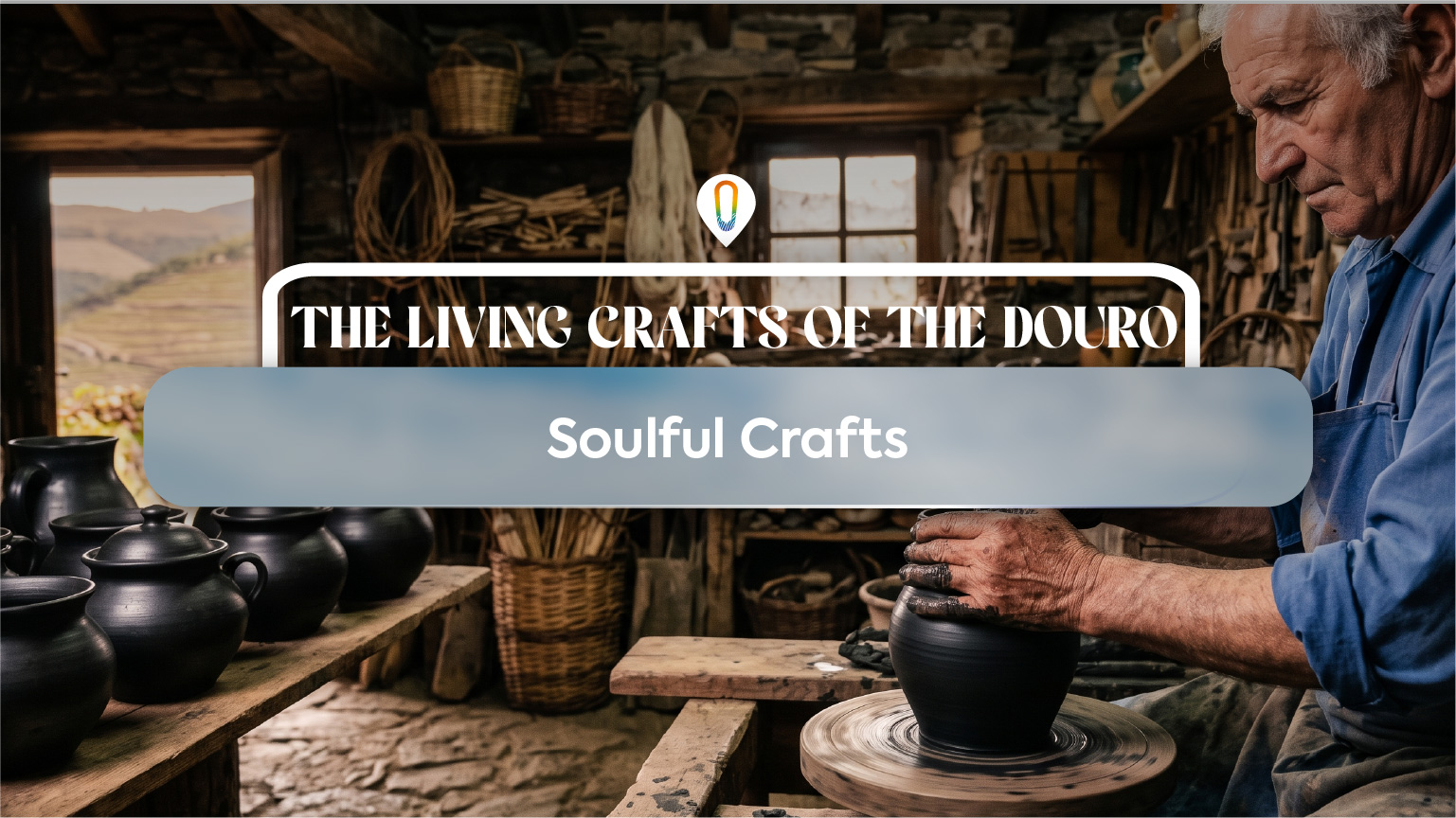
When we think of the Douro Valley, the mind immediately travels to the terraced hillsides, the shimmering river, and the excellence of the wines born there. However, the soul of this UNESCO World Heritage region also resides in the quiet gestures and ancestral wisdom of its people.
Beyond the modern wineries and estates, on the fringes of Douro’s villages, ancient crafts that shaped the region’s identity still endure. Visiting these artisans is not just a journey into the past; it is a way to support the circular economy and the sustainability of a region that refuses to let its history die.
We invite you to disconnect your GPS and discover the faces and crafts that still breathe life into the heart of the Douro.
Cooperage: The Guardians of the Wine’s Cradle
Neither Port wine nor the great aged DOC Douro wines would exist without the mastery of coopers. Cooperage is, perhaps, the craft most intimately linked to the region’s winemaking epic.
In traditional workshops—which still endure —the scene has been repeated for centuries: the aroma of toasted wood, the rhythmic sound of hammers, and the heat of the fire shaping the oak staves. Each vat, barrel, or cask is a masterpiece of mathematics and physics, built without nails or glue, relying solely on the perfect pressure of iron hoops and the artisan’s precision. Visiting one of these spaces means understanding where the aging process that brings worldwide fame to the region’s wines truly begins.
Bisalhães Pottery: Black Clay Born from Fire
Heading up the hillside toward Vila Real, we find the village of Bisalhães, the birthplace of one of the most singular techniques in the world: the manufacture of Black Pottery, inscribed on UNESCO’s List of Intangible Cultural Heritage in Need of Urgent Safeguarding.
The process is entirely manual, raw, and almost mystical. Potters shape the pieces—from traditional secret jugs to chorizo roasters—on a slow wheel. The great secret, however, lies in the firing. The pieces are buried in an open fire on the ground, covered with pine needles and earth, and smothered so that the smoke is retained. It is this reduction process that gives the pieces their unique metallic black color. Bringing home a piece of Bisalhães is carrying a piece of Douro earth and fire in your luggage.
The Weavers of Alvites: The Rhythmic Beat of Wooden Looms
Traveling toward the Upper Douro and the mountainous transition zones, the sound of iron gives way to the rhythmic beating of wooden looms. In small villages, a few women dedicate their lives to spinning and weaving linen and wool, just as they learned from their mothers and grandmothers.
The process often begins with the flax plant itself, which is harvested, rippled, beaten, and spun into a robust thread. On manual looms, blankets, rugs, and cloths are born with geometric patterns that tell stories of isolation, resilience, and love for the land. Each piece is unique, requiring weeks of meticulous dedication.
Wicker Basketry and the Art of Reed
On the banks of the rivers and streams that feed the Douro, wicker and reed grow wild—raw materials that the skilled hands of local artisans transform into utilitarian objects of great beauty.
Harvest baskets, once indispensable for carrying grapes up the steep slopes to the lagares (stone treading tanks), are still crafted by calloused hands that bend wicker with apparent ease. Similarly, reed mats and bags represent a timeless, ecological design that is now gaining a new lease on life in contemporary interior design and luxury tourism.
Why Include This Itinerary on Your Next Visit?
Discovering the craftsmanship of the Douro is about practicing conscious tourism with a positive impact. By visiting these workshops and purchasing a piece directly from the maker, you are:
- Preserving identity: Ensuring that knowledge does not become extinct with the current generations.
- Promoting sustainability: Valuing products made with local raw materials and processes with an almost non-existent carbon footprint.
- Experiencing authenticity: Moving away from mass tourist circuits and creating memories based on real, human conversations.
The Douro is made of wine, but it is its people and their arts that make it eternal. On your next trip, set aside a day to explore these hidden workshops and surprise yourself with the richness found in the details.


