

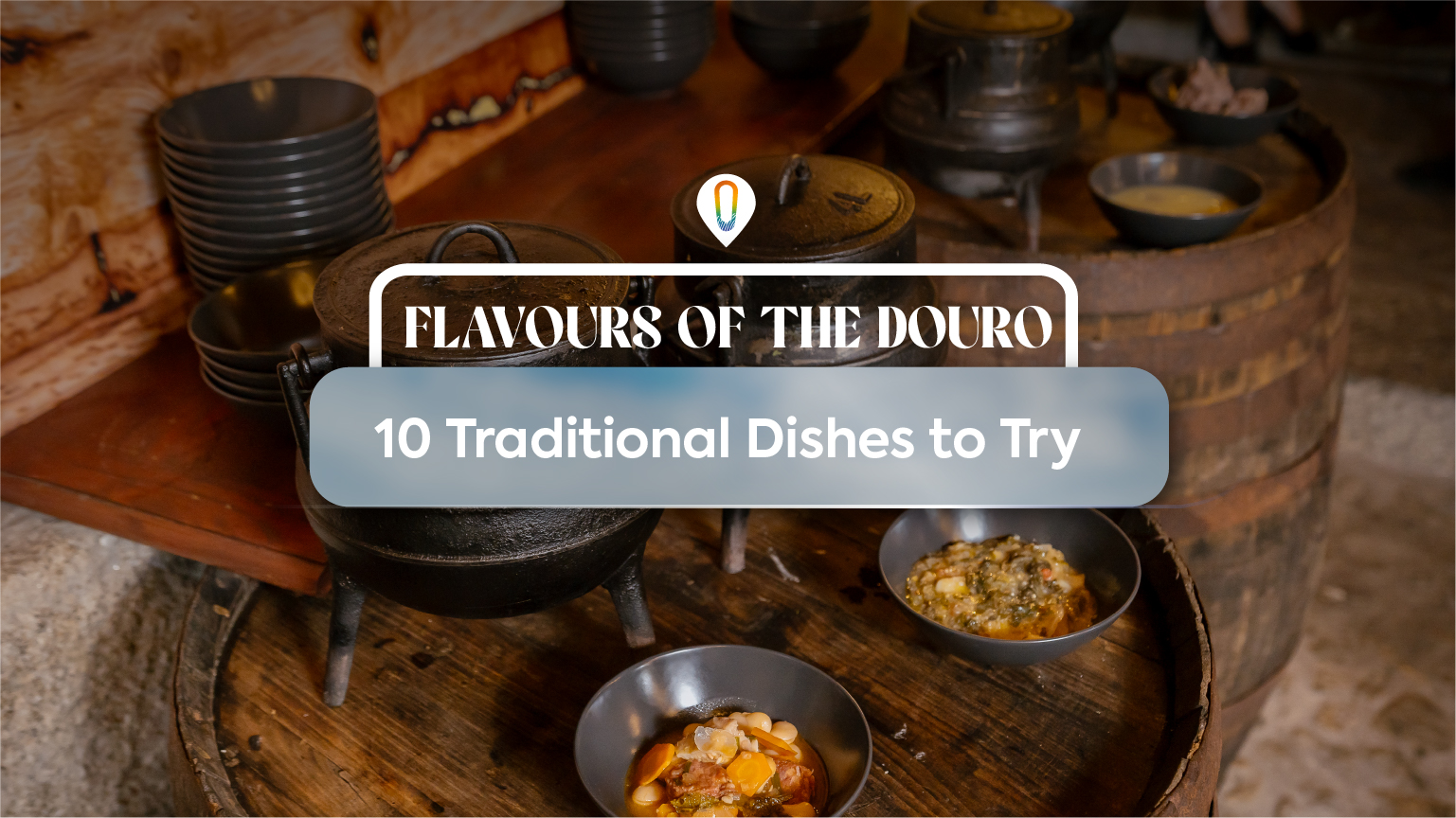
The Douro wins visitors over with its landscape, but it’s at the table that many truly fall in love with the region. Here, meals are unhurried, relaxed, and full of stories: family recipes, cast-iron pots, wood-fired ovens and flavours designed to nourish those who worked in the vineyards and the fields. If you’re planning your trip, it’s worth going beyond a simple “where can I have lunch?” and actively looking for the flavours that shape the Douro’s identity.
Among the meat dishes, grilled veal steak (posta) or a large grilled T-bone are almost mandatory stops. Thick, tender cuts, simply seasoned with coarse salt and seared over the grill, usually arrive at the table with “batatas a murro” (crushed potatoes), rice and vegetables. It’s a dish that looks simple but is packed with flavour, perfect to pair with a full-bodied Douro DOC red wine.
Another favourite is oven-roasted kid (young goat), marinated with garlic, wine and herbs, then slowly roasted in clay trays until the meat is tender and golden. It is typically served with oven-baked rice and roast potatoes, and it’s the kind of choice that tastes especially good on festive days or long family weekends.
Another comfort classic is Cozido à Portuguesa, a traditional Portuguese meat and vegetable stew where different cuts of meat, smoked sausages, cabbage, carrots, potatoes and beans are cooked together, often using village-made smoked meats. A close “relative”, though served a little differently, is the Transmontana feijoada or “house-style feijoada”, where beans, meat and smoked sausages simmer together in a single pot, usually served with white rice. Both are intense, hearty dishes, ideal for anyone who loves traditional food and isn’t afraid of big, bold flavours.
For those who prefer fish, salt cod (bacalhau) has a special place. In the Douro you’ll often find it baked in the oven, with crushed potatoes, onions, peppers and plenty of olive oil, but it may also be grilled or appear in other variations that change from restaurant to restaurant. It’s a comforting option for those wanting a break from meat, and it pairs beautifully with a good Douro white wine.
Closer to the river, the tradition of river fish and fish stews lives on, with species like “fataça”, “boga” and others, fried, grilled or stewed with potatoes, peppers and tomatoes. Many of these recipes appear as daily specials rather than on the printed menu, so it’s always worth asking the staff what they recommend that day.
Before, during and after the meal, smoked meats and cured sausages are a world of their own: chouriço, salpicão, alheira, linguiça, cured ham and more. Try them on sharing platters, in simple sandwiches made with regional bread or as part of dishes like cozido and feijoadas. They are products that tell the story of how meat was preserved throughout the year and they take on a new life in traditional grocery shops, markets and local fairs. Paired with a glass of red wine, they can turn any late afternoon into a truly Douro-style experience.
At the beginning of the meal, hearty village soups are another sign of authenticity. In the Douro, soup is not just a light starter: it is often almost a complete meal, with beans, vegetables, pasta or rice and sometimes pieces of sausage or other meats. Whether it’s a well-served caldo verde (kale and potato soup) or a thick bean and cabbage soup, it’s the perfect way to warm up after a hike or on a cooler day.
When dessert arrives, convent-style and regional sweets take centre stage. Egg-based desserts, puddings, “tigeladas”, dry cakes and rustic biscuits with nuts, honey or olive oil, as well as French toast and sweet vermicelli at festive times, fill the displays of pastry shops and restaurant dessert trolleys. These rich sweets almost naturally call for a glass of Port wine or a Douro moscatel to finish the meal in style.
If you prefer something lighter, seasonal fruit is always a safe bet: grapes (of course), figs, apples, pears, cherries or chestnuts, often from nearby orchards and gardens, along with homemade jams and marmalades you’ll find at markets and in regional product shops.
Exploring Douro gastronomy is, in many ways, a way of getting to know the region itself. Look for traditional restaurants in the towns and villages you visit, ask about the daily specials, let yourself be guided by the house suggestions and, whenever possible, pair these dishes with the wines of the region. Between a perfectly grilled steak, roast kid, oven-baked cod, a steaming bowl of soup and a convent-style dessert with a glass of Port, there’s a good chance that your strongest memory of the Douro will be… at the table.


