

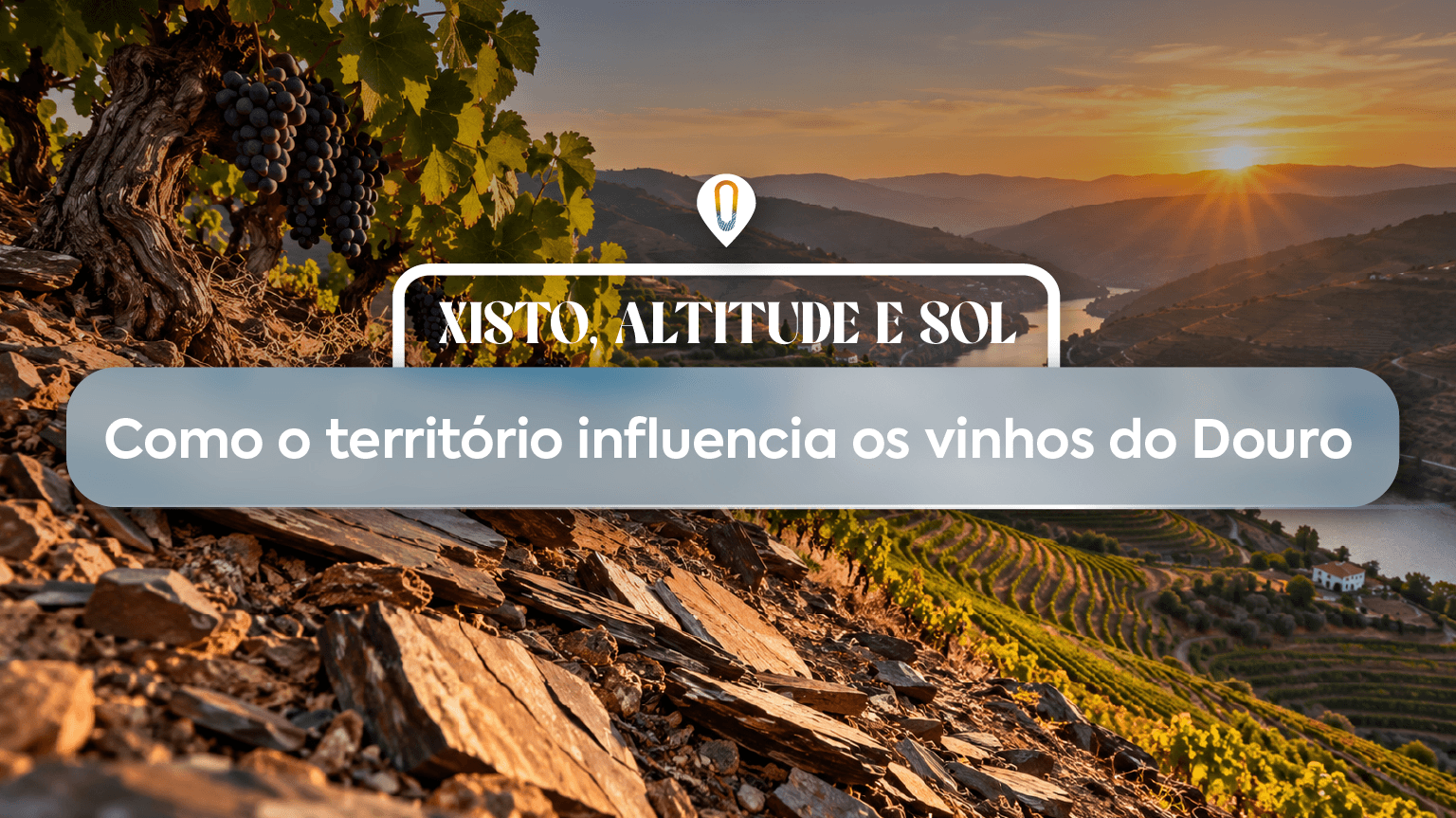
In the Douro, wine begins long before the harvest. It begins in the soil, in the slope of the hillsides, in the altitude of the vineyards and in the way each plot receives sunlight. The combination of these elements, together with grape varieties, climate and the work of those who cultivate the vines, contributes to the diversity of wines produced in the region.
At first glance, the Douro landscape may appear uniform, defined by terraces that follow the contours of the valley. However, a closer look at two vineyard plots reveals a far from homogeneous territory. Soil, slope orientation and altitude create different growing conditions, influencing grape development and the decisions made throughout the growing season.
Schist: The Foundation of a Distinctive Landscape
Schist is one of the most recognisable features of the Douro wine region. This metamorphic rock, abundant on many of the region’s hillsides, is closely linked to the landscape itself, from the terraces supporting the vineyards to the stone walls that mark their boundaries.
Its layered structure allows vine roots to find fissures through which they can grow, seeking water and nutrients deeper underground. In many areas, schist-derived soils are relatively shallow and stony, affecting water availability and vine development.
These characteristics are particularly relevant in a region with hot, dry summers. Water retention and drainage vary according to soil structure, depth and the position of each plot on the hillside. As a result, vineyards planted on schist do not all face the same conditions.
Schist alone does not determine a wine’s profile. Its influence combines with climate, grape variety, vine age, vineyard management and winemaking choices. It is this interaction that contributes to the complexity of the Douro.
Altitude: Differences That Matter in the Vineyard
Altitude introduces another important variable into Douro viticulture. The region includes considerable differences between lower-lying areas near the river and vineyards located at higher elevations.
In general, temperatures tend to decrease with altitude. This can moderate heat during grape ripening and influence the rate at which sugars, acidity and aromatic compounds develop.
In lower and warmer areas, ripening may progress more quickly, depending on exposure, water availability and the conditions of each growing season. At higher elevations, temperatures can favour a more gradual ripening process, although the outcome always depends on the combination of local conditions.
Altitude also affects the length of the growing cycle and the timing of the harvest. Understanding these differences helps producers select grape varieties and vineyard plots, monitor grape development and determine the appropriate time to pick.
There is therefore no single ideal altitude for every vineyard. Instead, there are different conditions that can be used to produce wines with distinct characteristics.
Sun Exposure: The Importance of Light and Heat
The orientation of a hillside determines how a vineyard receives sunlight throughout the day. In the Douro, where summers can be extremely hot, this factor plays a significant role in managing grape ripening.
Plots receiving more sunlight may accumulate more heat and encourage faster ripening. Under certain conditions, this can contribute to higher sugar concentrations and changes in acidity. However, excessive exposure, particularly during periods of intense heat, can also increase the risk of grape dehydration and sunburn.
Slopes receiving less direct sunlight may offer more moderate temperatures, sometimes extending the ripening period. The orientation and steepness of the hillside, shadows cast by surrounding mountains and air circulation all influence these effects.
Sun exposure should therefore never be considered in isolation. A high-altitude vineyard facing south may behave very differently from another at the same elevation but with a different orientation. Understanding each vineyard requires looking at these factors together.
A Region of Diverse Microclimates
The Douro’s diversity is also shaped by its geography. Mountain ranges, proximity to the river, distance from the coast and differences in altitude contribute to distinct climatic conditions throughout the region.
The three sub-regions — Baixo Corgo, Cima Corgo and Douro Superior — differ in rainfall, temperature and continentality. These characteristics influence water availability, the length of the vine’s growing cycle and the conditions under which grapes ripen.
Even within a single estate, vineyard plots can behave very differently. A sheltered vineyard, one exposed to the wind, a slope facing east or a plot at a higher elevation may each require a different approach throughout the year.
This diversity makes knowledge of the land particularly important. Observing the vineyards, monitoring weather conditions and drawing on the experience accumulated over generations help producers understand the differences between plots and adapt their work accordingly.
From Vineyard to Bottle: The Role of Human Decisions
The land establishes the starting conditions, but it does not work alone. How each producer interprets those conditions has a decisive influence on the wine that eventually reaches the bottle.
Grape variety selection, vine training, canopy management, yield control and harvest timing are among the factors that allow producers to respond to the characteristics of each plot. In the winery, decisions about fermentation and ageing add further dimensions to the final result.
This is also why wines from the same region can have such different profiles. Geographical origin is fundamental, but each wine’s identity emerges from the relationship between place, vine, growing season and the decisions made by the people producing it.
In the Douro, understanding schist, altitude and sun exposure means understanding an essential part of this relationship. The landscape is not merely the setting in which the vines grow: it is an active part of viticulture, requiring constant observation, knowledge and adaptation.
Every plot has its own conditions. Recognising and interpreting them is what allows the diversity of the landscape to become a diversity of wines.


