

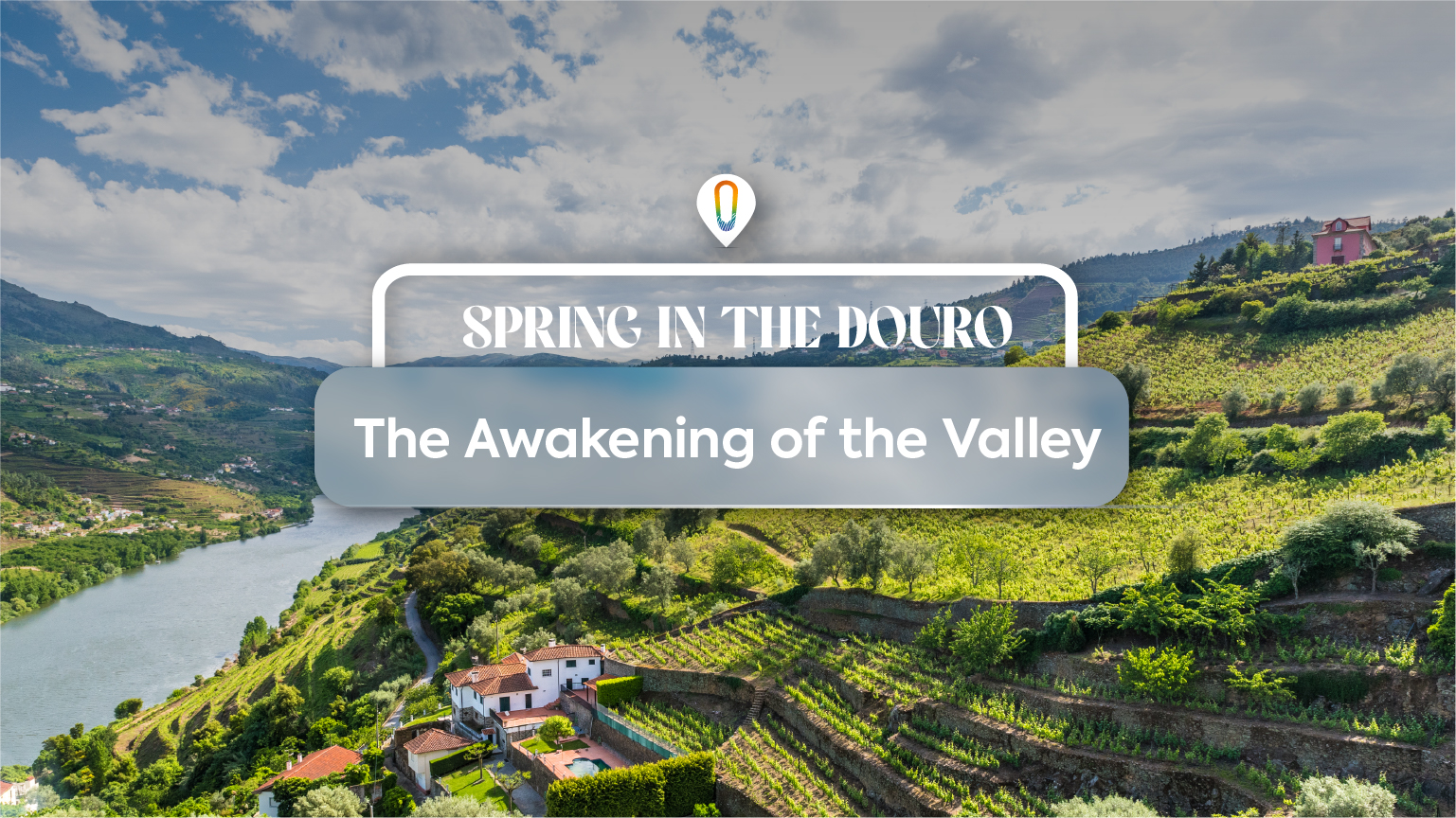
When we think of the Douro, our imagination immediately travels to the terraced vineyards and the mirrors of water that reflect the sun. However, there is another Douro, quieter, made of granite stone, gilded woodwork, and deep popular devotion. In the 19 municipalities that make up the Douro Intermunicipal Community (CIM), religious tourism is not just an experience of faith; it is an immersion in the architecture, history, and how populations interacted with nature over the centuries. Whether on a pilgrimage to a mountaintop sanctuary or in the retreat of the thick walls of a medieval monastery, the region offers true havens for the soul.
The rugged landscape of the valley was, early on, the perfect stage to build great sanctuaries and places of devotion at high altitudes that seem to touch the sky. In Lamego, it is impossible to bypass the majestic Sanctuary of Nossa Senhora dos Remédios, whose monumental baroque staircase, carved into the hill and flanked by chapels and tiles, offers one of the most stunning spiritual ascents in the country. Further east, in Sernancelhe, the Sanctuary of Nossa Senhora da Lapa stands as one of the oldest pilgrimage sites in the Iberian Peninsula, built around an impressive boulder where devotion literally merges with the rock.
Descending towards the Varosa Valley, in the municipality of Tarouca, we discover the silence and the heritage of the Cistercian Order. The Cistercian monks sought isolation and agricultural work, leaving an incalculable legacy, clearly evident in the Monastery of São João de Tarouca — the first of the order founded in Portugal, in the 12th century, where D. Pedro, Count of Barcelos, rests. A short distance away, the imposing Monastery of Santa Maria de Salzedas dominates the village landscape, bearing witness to the wealth and religious influence of the past through its grand baroque expansions.
Beyond the great monasteries, religion punctuates the Douro landscape through hermitages and viewpoints of faith that blessed the river and those who worked on it. The Sanctuary of São Salvador do Mundo, in São João da Pesqueira, is a set of small chapels culminating in one of the most spectacular viewpoints over the Douro River and the Valeira Dam, offering an ancestral pilgrimage site and absolute tranquility. Similarly, the faith of the populations shaped the towns, as seen in the Mother Church of São Miguel in Armamar, a beautiful Romanesque example built with stones from the old local castle.
Finally, the urban heritage and the splendor of the baroque are revealed with particular intensity in the city of Vila Real. Here, the wealth of noble families translated into exceptional sacred art, clearly visible in the Capela Nova, a masterpiece with a Renaissance and baroque facade attributed to Nicolau Nasoni, and in the Cathedral of Vila Real, the former church of the Convent of São Domingos, whose austere mendicant Gothic architecture contrasts fascinatingly with the exuberance of other monuments in the city.
Exploring religious tourism in the municipalities of the Douro CIM is, fundamentally, discovering the invisible thread that unites humanity with the monumental landscape of the valley. It is an invitation to slow down, listen to the silence, and contemplate an architectural and spiritual beauty that stoically withstands time.


