

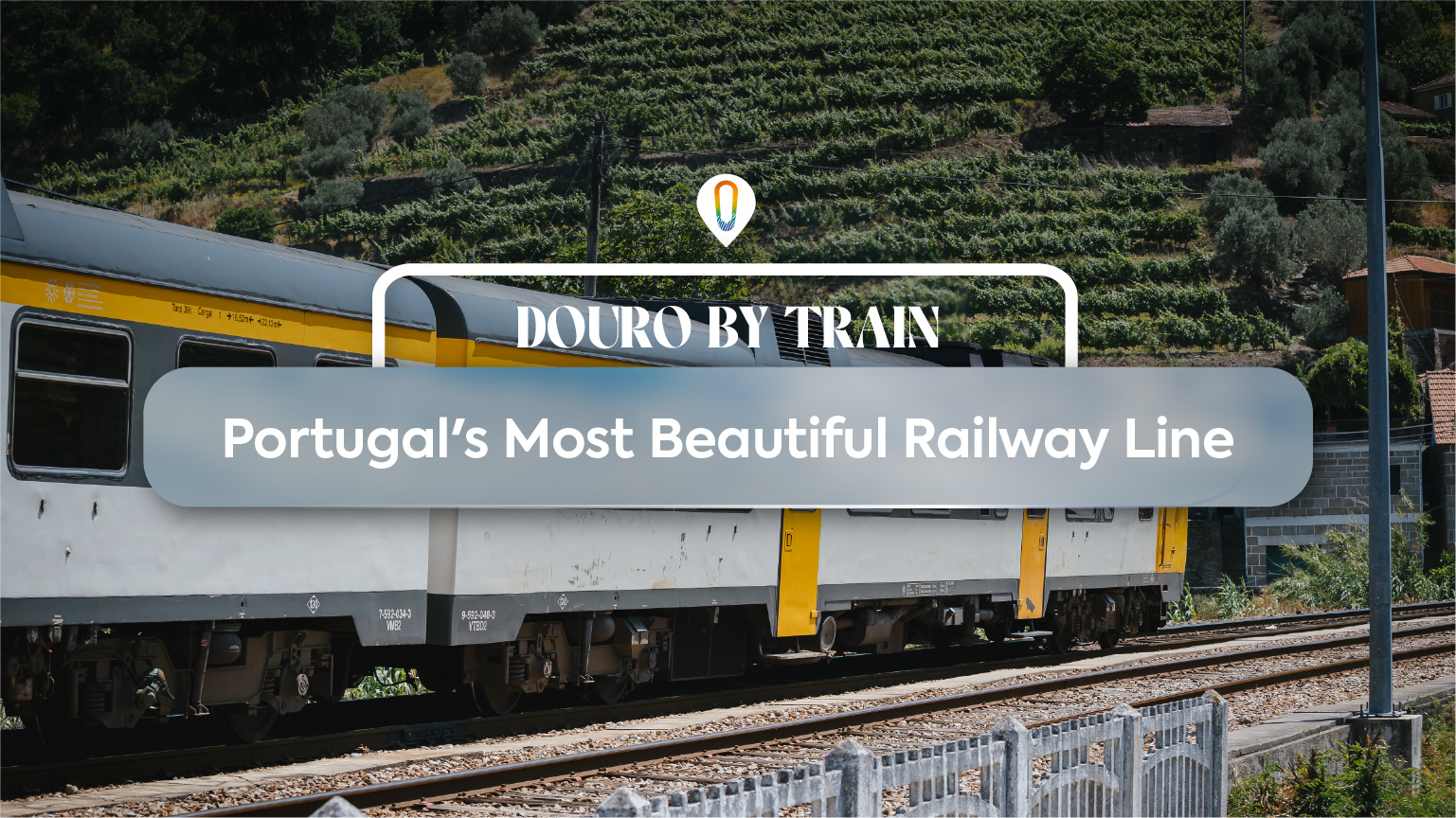
Some journeys are made to reach a destination. Others are journeys where the journey itself is the destination. The Douro Line is undoubtedly one of them.
Built between 1875 and 1887, this railway was considered a remarkable feat of engineering in the 19th century and remains impressive today. Stretching for more than 170 kilometres, the train follows the Douro River from Porto to Pocinho, crossing the world’s oldest demarcated wine region on a route that Portugal’s national railway company describes as a multisensory experience.
The journey begins at São Bento or Campanhã stations in Porto and gradually transforms as the city fades into the background. From Mosteirô onwards, the Douro Wine Region reveals itself in all its splendour: terraced vineyards cover both sides of the river, wine estates emerge among the vines, and the train winds through the valley’s curves at a leisurely pace that invites passengers to simply sit back and admire the view.
Along the way, travellers cross iron bridges, pass through tunnels carved into the rock and stop at stations that are true works of art. Pinhão Station, with its 24 azulejo tile panels dating from 1937 and depicting the life and traditions of the Douro people, is an essential stop and one of the most photographed railway stations in Portugal.
During the summer, CP – Portuguese Railways operates the Historic Douro Train, made up of five wooden carriages from the early 20th century, hauled by a diesel locomotive painted in its original colours. Departing from Régua, the experience includes traditional entertainment on board, a complimentary glass of Port Wine and stops in Pinhão and Tua, where passengers can explore the landscape and sample local products.
It is, quite literally, a journey back in time through the heart of the Douro Valley.
Few railway routes in the world offer such a perfect combination of nature, history, railway heritage, Portuguese tile art and the simple pleasure of slow travel. If you have not yet experienced this journey, now may be the perfect time.


